


Workforce Management Metrics Made Easy with Hollat

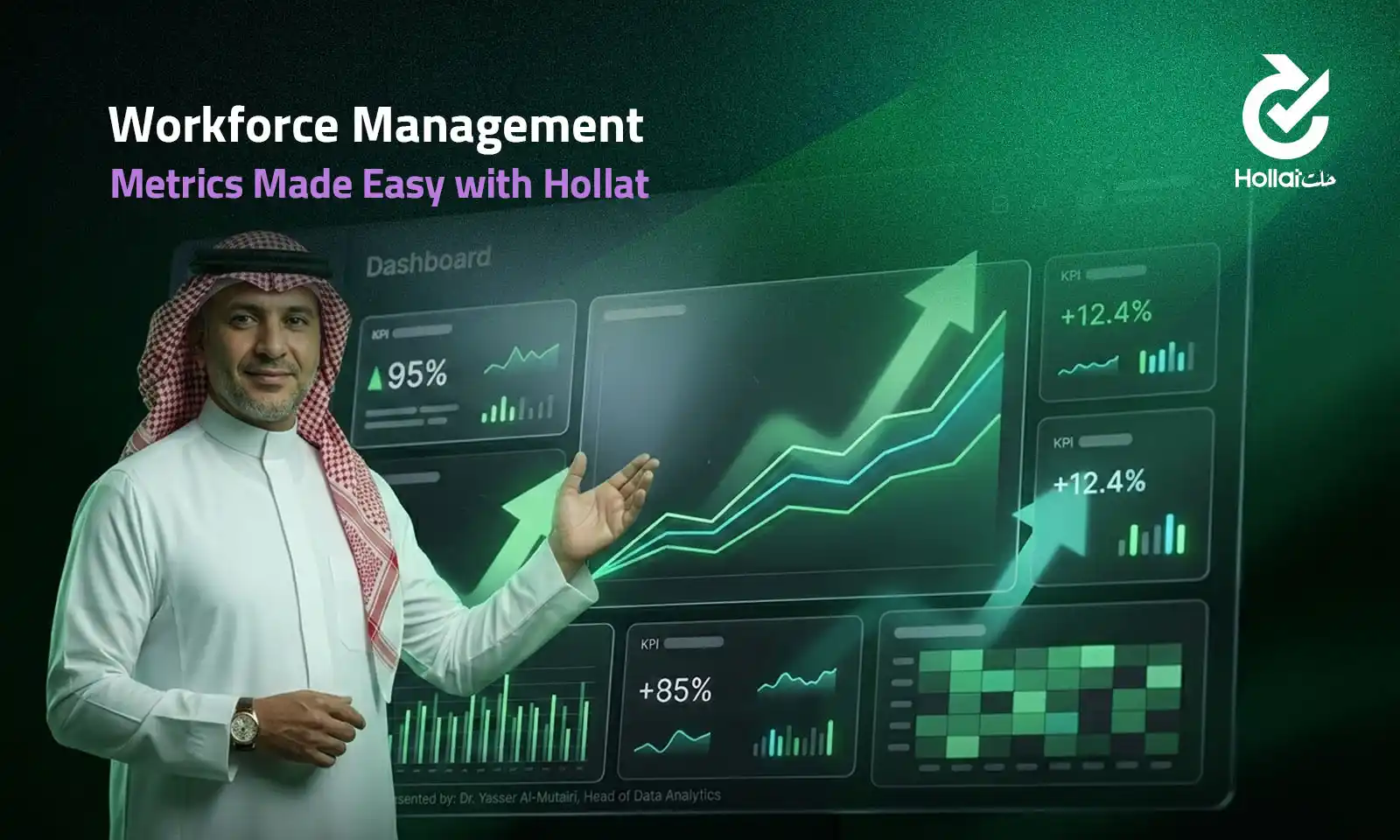
With the fierce competition in the business world, organizations need to make decisions based on data to maximize productivity, minimize expenses, and optimize workforce performance. By monitoring the appropriate metrics, businesses can gain valuable insights into the effectiveness of their workforce management metrics, including employee efficiency, attendance, labor costs, and overall operational efficiency.
Through the integration of cutting-edge workforce analytics, workflow automation software, and powerful reporting solutions, businesses can make informed decisions and drive sustainable growth. This guide describes the key workforce management metrics, their significance and how businesses can leverage them effectively in conjunction with Hollat.
What Are Workforce Management Metrics?
Workforce management metrics are measurable indicators that measure workforce performance and productivity, attendance, scheduling effectiveness, and labor costs. These indicators give organizations the information to enhance workforce planning, pinpoint operational issues, and fine-tune employee efficiency. In today’s business, real-time data collection and automated reporting are often achieved using a workforce measurement along with an automation platform and automation CRM systems.
Why Are Workforce Metrics Important to Track?
By tracking workforce metrics, organisations can:
- Improve employee productivity
- Reduce operational inefficiencies
- Control labor expenses
- Enhance workforce planning
- Increase employee engagement
- Provide the right information to help businesses grow.
- Enhance workforce decision-making with workforce analytics
By consistently tracking workforce management KPIs, companies can detect problems and take corrective measures before they impact performance.
Employee Productivity and Performance Metrics
Employee productivity measures indicate the efficiency with which employees perform their work and contribute to the organization’s objectives.
Some of the most common methods of measuring employee performance are:
| Metric | Purpose |
| Output per Employee | Measures individual productivity |
| Task Completion Rate | Tracks completed assignments |
| Revenue per Employee | Evaluates employee contribution to revenue |
| Performance Review Scores | Assesses overall employee effectiveness |
| Goal Achievement Rate | Measures success against objectives |
These measures can be used by managers to recognise top performers and areas for further support and training.
Absence and Attendance Rate Metrics
Attendance data can offer information about the reliability of the workforce and employee engagement.
Key metrics include:
- Absenteeism Rate
- Attendance Percentage
- Unscheduled Leave Frequency
- Sick Leave Utilization
- The rate at which employees leave an organization due to absences.
Monitoring attendance trends can lead to better workforce planning and minimize disruptions for businesses.
Schedule Adherence and Shift Compliance
Schedule adherence is the extent to which workers stick to their work schedules.
Important metrics include:
- Shift Attendance Rate
- Schedule Compliance Percentage
- Overtime Frequency
- Late Arrival Rate
- Early Departure Rate
With workforce optimization tools, organizations can automate the tracking of schedules and easily pinpoint inefficiencies in scheduling.
Labor Cost and Efficiency Metrics
Labor costs are often one of the largest operational expenses for any business, making it essential to monitor workforce spending carefully. Tracking labor-related metrics helps organizations understand how efficiently their workforce is being utilized and where opportunities for cost savings exist.
Some of the most important labor cost metrics include labor cost percentage, overtime costs, cost per employee, cost per task completed, and workforce utilization rate. These indicators provide valuable insights into staffing efficiency, resource allocation, and overall operational performance.
When businesses regularly analyze these metrics, they can identify unnecessary expenses, reduce excessive overtime, and improve workforce planning. This leads to better budget management and more informed decision-making.
By combining labor cost analysis with modern workflow automation software, organizations can streamline administrative processes, automate repetitive tasks, and gain access to real-time workforce data. This not only reduces manual workloads but also improves accuracy, enhances productivity, and supports long-term business growth through more efficient workforce management.
Importance of Workforce Management Metrics in Business Growth
Good HRM directly affects the success of the business. The organizations that track workforce metrics can:
- Increase operational efficiency
- Improve customer satisfaction
- Reduce employee turnover
- Enhance workforce productivity
- Support strategic planning
- Optimize resource allocation
With workforce analytics, business leaders can get insights that can help them make decisions that benefit the business in the long run and help it become profitable.
Common Challenges When Tracking Workforce Management
Collecting and analyzing workforce data poses a challenge to many organizations.
Common challenges include:
- Manual data collection procedures
- Inconsistent reporting methods
- Inadequate central information on workforce.
- Struggling to connect several systems together.
- Lack of live performance visibility
The problems can make it difficult for businesses to fully leverage workforce management KPIs and make informed decisions.
Improve Your Workforce Management with Hollat
For organizations, Hollat makes workforce monitoring easy with cutting-edge automation and analytics solutions. This means that businesses can have a comprehensive view of their workforce, including attendance, scheduling, and labor costs.
Hollat’s solutions support:
- Automated workforce reporting
- Real-time workforce analytics
- employee performance metrics tracking
- Schedule optimization
- Labor cost management
- Interdepartmental workflow automation
With accurate, real-time information, Hollat can help businesses automate manual tasks and enhance their workforce productivity.
Hollat for Workforce Management Solutions
Hollat platform offers robust workforce management solutions that enable businesses to boost productivity, cut costs, and foster sustainable growth. With intelligent automation, workforce analytics, and advanced reporting features, companies can have more control over workforce operations and make confident data-driven decisions.
From workforce optimization solutions to automation CRM integration and a comprehensive automation platform, Hollat provides solutions that are scalable to meet the demands of today’s business.
FAQ
What are workforce management metrics?
Workforce management metrics are quantifiable data that can be used to monitor employee productivity, attendance, labor expenses, scheduling effectiveness, and overall workforce performance.
Why are workforce metrics important for businesses?
They assist organizations to make better business decisions with workforce analytics, increase productivity, better control labor costs, and improve operational efficiency.
What are the most important KPIs in workforce management?
The most important workforce management KPIs are employee productivity, absenteeism rate, adherence to the schedule, labor cost percentage, employee turnover rate, and workforce utilization.
How do you measure employee productivity effectively?
The level of productivity of employees can be determined by their output, task completion rate, goal achievement, contribution to revenue, and performance evaluation scores.
What tools are used for workforce analytics in 2026?
Organizations are increasingly leveraging workforce analytics platforms, workflow automation software, workforce optimization tools, automation CRM systems, and integrated automation platforms to track and enhance workforce performance.