


infrastructure monitoring for saudi government entities

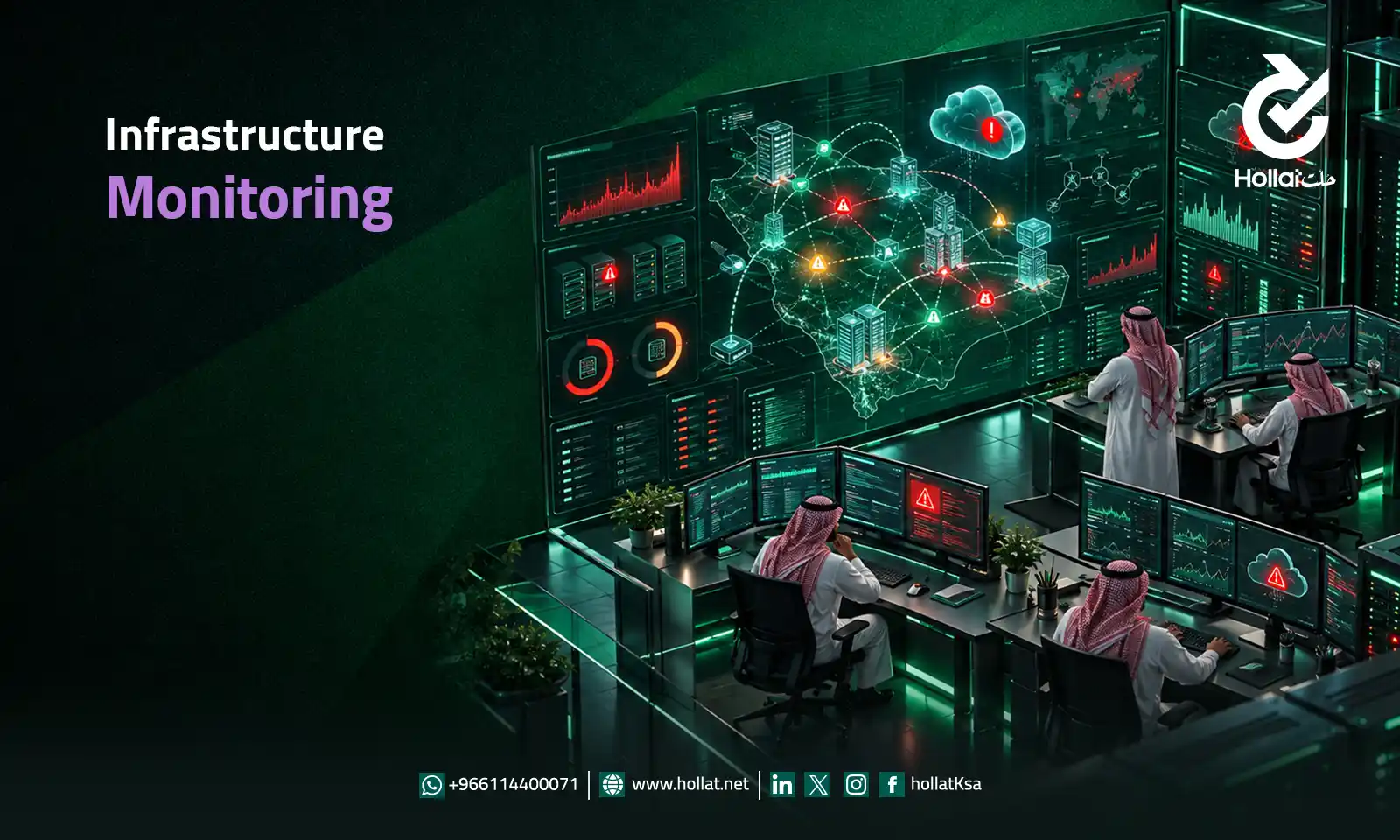
In Saudi government entities, infrastructure monitoring is becoming a vital component of ensuring reliable digital services. The reliance on applications, networks, servers, cloud-based environments, and shared digital platforms has driven a need for constant awareness and visibility into the infrastructure that enables government services.
monitoring isn’t just a matter of technical issues for government organizations. It also helps to facilitate service availability, quicker responses to incidents, capacity planning, and the continuity of digital services for beneficiaries. This is in line with the broader government digital transformation agenda of ensuring digital services are available, connected, and measurable.
What is infrastructure monitoring?
Infrastructure monitoring is the ongoing monitoring of the underlying technology that powers the digital services of an organization. This can be servers, networks, databases, applications, cloud services, storage, and other critical infrastructure.
Today’s monitoring solutions gather performance data and alerts from various components of the environment. IT teams can then use the information to detect unusual behavior, investigate incidents, and determine if it’s a technical problem impacting an important service.
The visibility is especially critical for governments if they have multiple systems delivering the same service to beneficiaries. Continuous monitoring of shared systems and services, such as monitoring infrastructure and related services to ensure continued operations, is part of the Digital Government Authority’s standards.
The goal is not just gathering technical metrics but capturing the “how” and “why” of a process. Good infrastructure monitoring links the performance of infrastructure to the availability and quality of the services that rely on it.
Looking to make your IT environment more visible? Talk with our team about your monitoring needs.
How Infrastructure Monitoring Works
The first step to a typical IT infrastructure monitoring process is identifying what to monitor. System health and performance can be reported by monitoring agents, integrations, logs, API and other data sources.
The monitoring environment then sets thresholds or conditions that will signal unusual behaviors. CPU utilization, memory usage, network traffic, storage capacity, response time, or service availability are just a few examples of metrics that an organization could monitor.
If a defined condition occurs, an alert is generated by the system. The IT team can then investigate and decide if it has to be done right away.
This is where integrating IT service monitoring with the service management becomes valuable. Instead of dealing with an alert as a single technical problem, teams can link it to an incident, assign responsibility, document the incident response, and mark the incident as resolved.
Our company’s intelligent assistant, called HAIAT AI, can also assist the teams to access information and interact with operational processes. While AI can’t replace the human decision-making process, it can assist teams in better utilizing operational data.
Use Cases of Infrastructure Monitoring
Infrastructure monitoring can be used in multiple areas of operations:
- Track server and network performance.
- Monitoring Application & Service availability
- Identifying irregular resource utilisation
- Continuous monitoring of cloud and hybrid environments.Real-time monitoring of cloud and hybrid environments.
- Supporting incident investigation
- Monitoring capacity and infrastructure utilisation
- Correlating technical alerts and service management workflows.
Khaled Case Study: Connecting Infrastructure Monitoring with Government Services
Khaled was looking for a more connected way to monitor the infrastructure supporting a government digital service. His challenge was not limited to seeing technical alerts. He needed the technical and service teams to understand how infrastructure conditions could affect the services used by beneficiaries.
Hollat helped Khaled connect infrastructure monitoring with the government help desk, service management, workflows, and operational communication. Instead of treating an infrastructure alert as an isolated technical event, the relevant information could be connected to service requests and incidents, giving the teams a broader operational view.
Through Hollat’s platform, Khaled could also benefit from connected service channels and workflows, while HAIAT AI could assist teams in accessing operational information and interacting with processes. This gave the teams a more structured way to investigate issues, coordinate responses, and follow service-related cases.
The result was not a promise that monitoring would prevent every service disruption. Rather, Khaled had a more connected operational model in which infrastructure information, service management, and communication could work together to support faster investigation and better-informed decisions.
Challenges of Infrastructure Monitoring
As infrastructure grows larger and more complex, with the addition of more systems, cloud resources, applications, and digital services, it becomes more difficult to monitor.
Limited visibility across IT infrastructure
Teams might not be able to see all the servers, networks, applications, and cloud resources. This can make it difficult to assess if a standalone technical problem is related to a larger service problem.
Too many monitoring tools and alerts
Having several different IT infrastructure monitoring tools can lead to siloed data and too many alerts. If not prioritized appropriately, important incidents can get lost in a sea of low-priority notifications.
Delayed detection of system failures
If the monitoring is largely reliant on manual checks, the technical teams will find out about failures when users have already felt the impact of disruption. With continuous monitoring, the response team can be more aware of an incident and be able to help faster.
Difficulty identifying the root cause
A service disruption might entail many related parts. The performance information from various layers by infrastructure monitoring can help technical teams to find the root cause of the symptom rather than concentrating just on the symptom.
Managing hybrid and cloud environments
Combinations of on-premises infrastructure, private cloud, public cloud and third-party services can be used by the government. Appropriate integrations and monitoring procedures are needed to ensure consistency in the visibility of these environments.
Maintaining service availability at scale
The more the number of digital services grows, the more complex it becomes to keep them up and running. Monitoring should grow to fit the environment and be linked to the processes that lead to incident response.
How Infrastructure Monitoring Improves Digital Service Reliability
Government digital transformation can be aided by effective infrastructure monitoring, which can be used to link up technical visibility with service reliability.
Detecting incidents before service disruption
Sometimes performance changes hint at a problem occurring prior to a full-service failure. Monitoring enables teams to probe into these signals and respond when relevant.
Reducing downtime and response times
Rapidly alerting the appropriate teams allows investigation to be initiated earlier. Another way to cut down on the “handoffs” is to link alerts to workflows and escalation rules.
Improving service availability
The monitoring of service health offers a better understanding if critical systems are performing as intended. This is also important for government services which households may need on a regular basis during the day.
Supporting capacity planning
Patterns in resource use can be identified from historical monitoring data. This information can be utilized by teams when planning infrastructure upgrades, allocating resources, or preparing for times of increased demand.
Improving operational visibility
Having a centralized operational view provides a better picture of infrastructure conditions, along with its service requests, incidents and SLA performance.
Protecting the digital experience of beneficiaries
The consequence of technical reliability is the beneficiary experience. A slow application, not available portal or failed digital transaction can turn into an instant issue of service. That’s why infrastructure monitoring needs to be seen as a bigger part of the service experience than just a job for IT.
Hollat Case Studies in Saudi Arabia
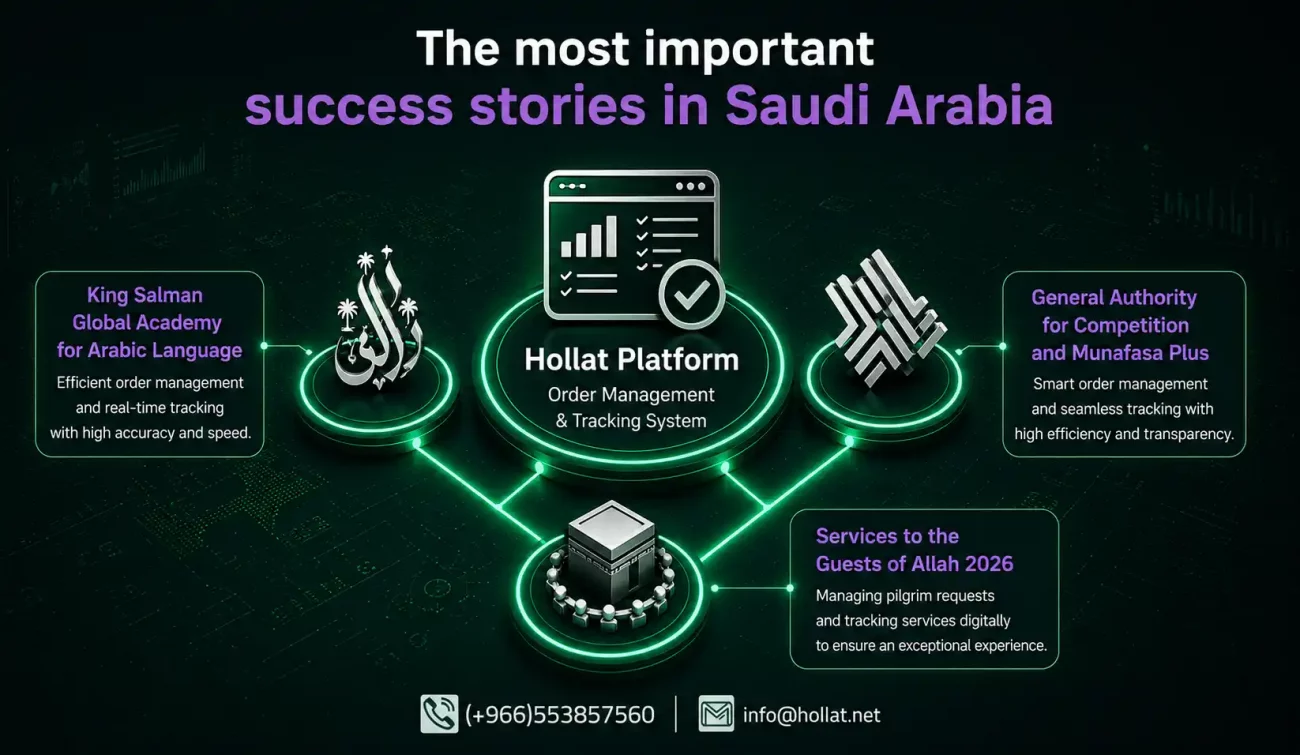
Our work with Saudi organizations demonstrates how ai customer service, workflows, communication, and operational visibility can work together.
King Salman Global Academy for Arabic Language
The King Salman Global Academy for Arabic Language is among the organizations associated with our service solutions. Its operational environment illustrates the importance of organizing service interactions and workflows so that teams can maintain visibility over requests and actions.
Connecting these service processes with infrastructure monitoring can give technical and operational teams a broader understanding of how technology performance affects users.
General Authority for Competition and Munafasa Plus
Munafasa Plus is another example of a digital environment where request management, workflow tracking, and communication need to operate in a coordinated way. Structured workflows can provide clearer visibility into requests and their progress.
When technical monitoring is connected to these operational processes, a service issue can be treated as part of an end-to-end case rather than as a disconnected technical alert.
Services to the guests of Allah 2026
Services supporting the Guests of Allah 2026 involve high-volume digital interactions and coordinated service delivery. Our solutions have been discussed in this context for managing requests, connecting service channels, and tracking cases.
In such environments, infrastructure monitoring can complement service management by helping teams maintain visibility when demand increases.
Hollat for Intelligent Infrastructure Monitoring in Saudi Arabia
Our approach is to connect monitoring with the wider operational environment instead of treating technical infrastructure as a separate silo. The platform combines service management, workflow automation, multichannel communication, reporting, and AI capabilities within one operational environment.
For Khaled, this can mean a more connected experience when he submits a request through one channel and follows up through another. For technical and service teams, it can mean better visibility into requests, workflows, and operational activity.
HAIAT AI adds an intelligent layer that can help teams interact with information and processes more efficiently. Multichannel support can bring requests from channels such as WhatsApp, email, web forms, and call centers into a unified operational flow.
The goal is not to suggest that a monitoring platform by itself guarantees service availability. Reliable digital services still depend on infrastructure architecture, governance, technical processes, cybersecurity, capacity, and the teams responsible for operating them.
Instead, infrastructure monitoring provides the visibility needed to identify issues, understand trends, coordinate responses, and make better operational decisions.
Ready to strengthen your infrastructure visibility? Talk to our team about monitoring, service management, AI, and multichannel operations for your organization.
Frequently Asked Questions
How does infrastructure monitoring prevent downtime?
While infrastructure monitoring doesn’t prevent downtime, it can help lower risk and length of service disruptions by identifying unusual conditions, providing alerts, and providing visibility into system health to the technical teams. Rapid detection enables teams to investigate incidents and react before issues grow into bigger problems.
Is AI useful for infrastructure monitoring?
Yes. AI can be used to process the operational data, detect trends and patterns, prioritize alerts, provide summary information, and support technical teams in information retrieval. AI should not, however, be a substitute for technical oversight and operational controls, but must be used in conjunction with existing monitoring, incident management and human decision-making processes.
What is the difference between infrastructure monitoring and ITSM?
Infrastructure monitoring is dedicated to keeping track of infrastructure performance and the health of technology elements like servers, networks, applications, and cloud resources. ITSM has been responsible for the management of IT services and processes, such as incidents and requests, changes and service levels. Technical events can be monitored and action taken on them in ITSM workflows.
What are the four types of infrastructure?
There are four main types of infrastructure: physical infrastructure, digital or IT infrastructure, cloud infrastructure and network infrastructure. However, a combination of these categories are common in practice in modern organisations. The specific classification varies depending on the architecture, operating model and technology environment of the organization.