


Digital Workflow Solutions for Enhancing Government Services

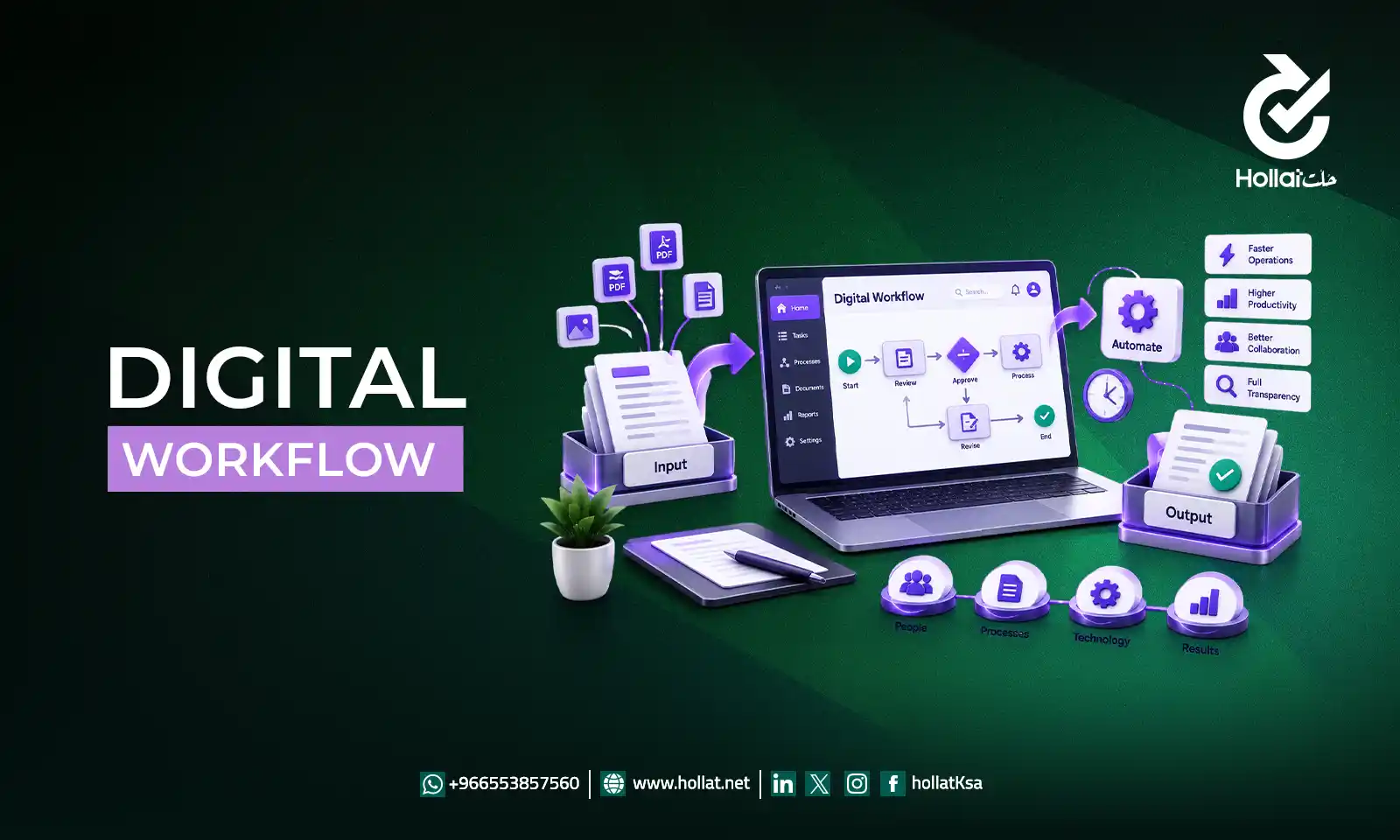
A Digital Workflow enables Government organisations to break free of the silo mentality and fragmented processes, and adopt structured digital Workflows that link people, systems, approvals and service requests.
Government bodies are making digital transformation a priority in Saudi Arabia, and workflow technology can enable them to deliver better service, slash processing times, enhance transparency and offer up real-time operational information for decision-makers.
A good digital workflow also has the potential to integrate current government systems, ensuring adequate security and access control, and build an efficient environment for employees and beneficiaries.
What is a digital workflow?
A digital workflow is a series of tasks, approvals, decisions and actions that are facilitated by digital technology. The digital workflow automatically progresses a request through predesigned stages rather than using paper forms, email, spreadsheets or manual follow-up.
What are the benefits of a digital workflow?
For government agencies, digital workflows can offer substantial benefits in reducing manual tasks and providing visibility throughout processes.
Optimize and streamline business processes
Digital workflows can save organizations from wasting time on unnecessary steps and repetitive activities. Requests may be automatically routed to the appropriate department without reliance on human communication.
Standardised processes can also help to minimise duplication of effort and clarify roles. Especially useful for government departments with high volumes of applications, complaint, approval or internal requests.
Create time for more valuable work
Automation can reduce the amount of time employees spend on repetitive administrative activities. Things like requesting tasks, reminders, statuses, and reports can be done automatically.
This enables employees to focus more on analyzing, communicating, problem-solving, and decision-making.
Increase workplace transparency
A digital workflow provides employees and managers with more transparency on requests and tasks.
Authorized users can view if a request is pending, assigned, under review, waiting for approval or completed. This can help to minimise uncertainty and facilitate the detection of delays.
Transparency can also help with improved accountability in government organisations as their process activities can be documented and audited.
Provide hard data about workflow and process efficiency
One of the main advantages of digital workflows is the ability to collect operational data.
Organizations can measure indicators such as:
- Average processing time.
- The number of requests that have been processed.
- Pending requests.
- SLA compliance.
- Employee workload.
- Escalation frequency.
- Process bottlenecks.
Enable remote work
Authorized staff members can access tasks, requests, approvals and information remotely using digital workflows.
This is especially valuable for organisations that have multiple locations across the country, or employees based in different areas. Staff are not required to be in a particular office or have physical documentation.
What are some digital workflow obstacles?
Digital workflows can help to increase efficiency, but they can come with some challenges. Government organizations generally have complicated environments that include legacy systems, several departments, strict security requirements, and existing processes. Common obstacles include:
Resistance to Change
New digital workflows can be challenging at first to implement for employees who are used to manual approaches. Clear communication and training will help staff to understand how the new system will benefit them in everyday work.
Legacy Systems
Current government software could not have been built to be compatible with current workflow software. Therefore, it is of importance to integrate properly.
Complex Processes
Some government processes involve multiple departments, approvals, regulations, and exceptions. Attempting to automate a poorly understood process can create additional complexity.
Data Security
Government systems are involved with vital data, which makes security, authentication, authorization, and data protection a key concern.
Poor Process Design
Technology isn’t necessarily the answer to an inefficient process. First, an organisation needs to analyse and simplify the workflow before automating it.
This is therefore a combination of technology, process analysis, change management, employee training and suitable governance that will create a success.
Features of an Effective Digital Workflow System
The best workflow software is far beyond just task automation platform. Government organizations want tools that can handle their complex processes, and offer visibility, integration and security.
Workflow Automation and Task Management
Tasks, requests, notifications, approvals and escalation should be automated based on pre-defined rules.
This can help minimize manual coordination and the ability to ensure that requests are delivered to the correct department or employee.
Real-Time Tracking and Reporting
Managers need to see workflow performance via dashboards and reports.
The real time data can help determine bottlenecks, track workloads, gauge SLA performance, and assess process objectives.
Integration with Government Systems
No one uses just one application within a government organization. The ideal workflow solution should be able to connect to the relevant systems, and so information should flow between platforms without the need for useless manual data entry.
By linking existing applications to standardized processes, integration can assist in other government automation efforts.
Data Security and Access Control
The architecture of the workflow should be designed with security in mind. Access controls can be used to restrict employees from viewing information and actions that aren’t authorized for them.
Organizations can safeguard sensitive data without compromising operation visibility with authentication, permissions, activity logs and secure data handling.
Hollat Success System Stories in Saudi Arabia
Hollat has been involved in digital transformation projects in Saudi Arabia and provides examples of digital service management and workflow automation in various government and institutional settings.
King Salman Global Academy for Arabic Language
As an example of digital solutions to enhance organizational workflows, Hollat is mentioned for its work with the King Salman Global Academy for Arabic Language. Automating processes can enable institutions to better coordinate internal services, organize requests and approvals, and enhance team coordination.
General Authority for Competition and Munafasa Plus
In addition, Hollat mentions its participation in Munafasa Plus, which is affiliated with the General Authority for Competition. Digital service workflows can facilitate request and interaction organisation, and enhance visibility of service and transaction progress.
These are just a few examples of how workflow automation Saudi Arabia can benefit businesses with complex service operations and many users.
Services to the Guests of Allah 2026
Hollat has also mentioned its digital solutions in the context of supporting services provided to Guests of Allah for 2026. Coordinated service delivery, quick communication, and high volume of requests need to be managed in large-scale initiatives involving pilgrims.
Digital workflows can facilitate connections between service channels, routing requests, tracking cases and disseminating operational information to the appropriate teams. This approach shows how digital workflow technology can help deliver high-demand public services.
Hollat is the Ideal Partner for Digital Workflow Solutions
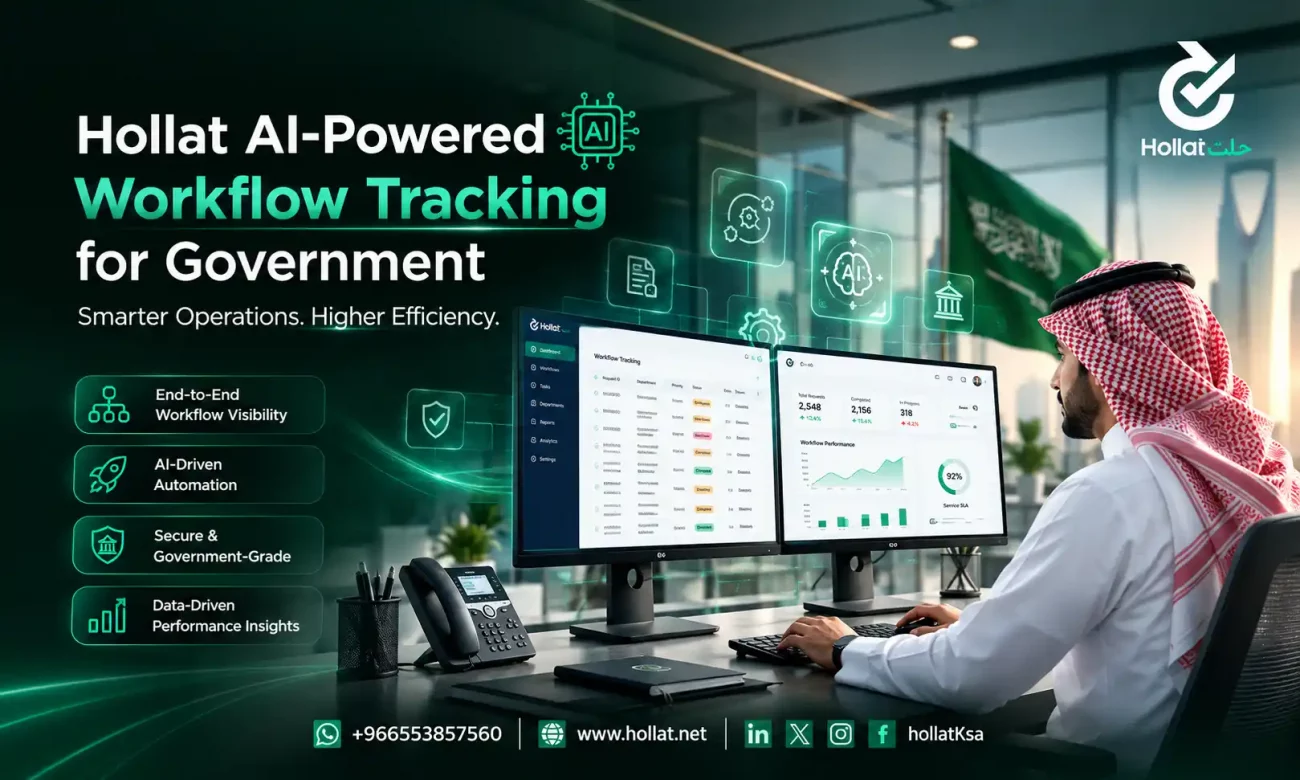
Hollat offers digital solutions to help organisations manage services, requests, workflows and customer interactions in one place. It can be used to automate workflow, manage tasks, monitor SLA, report, integrate and deliver services in multiple channels.
The ideal workflow solution for government departments and processes should be flexible enough to accommodate various workflows and departments, yet still give government organizations a single view across their workflows.
Hollat provides assistance to various organizations to transition from siloed manual processes to organized digital ones. It can handle any process from the moment it is submitted until it is routed, assigned, approved, escalated and completed.
The same can be implemented to power business process automation Saudi initiatives in government and enterprise settings. Automation, analytics, and centralized service management enable organizations to be more effective and understand operational performance better.
Digital transformation is more than just about replacing paper with software for government organisations. It’s about the redesigning of processes to help technology, employees and services to work more effectively together. This transformation is supported by a well-designed workflow.
Contact Hollat
Talk to Hollat today to learn how, with a focus on digital workflows, you can make government more efficient, service more effective, and digital transformation more rapid.
FAQs
Can you give me an example of a digital workflow?
A government service request is a simple example. A citizen submits a request digitally, the system validates the information, assigns it to the relevant department, sends notifications, manages required approvals, tracks the SLA, and records the final resolution automatically.
How can I create a digital workflow?
Start by mapping the existing process and identifying its inputs, tasks, decisions, responsible employees, and expected outcomes. Then remove unnecessary steps, define automation rules, configure the workflow in a suitable platform, test it with users, and monitor performance after launch.
Are digital workflows secure for government use?
Yes, digital workflows can be designed for government use with appropriate security controls. Role-based access, authentication, permissions, activity logs, encryption, and secure integrations can help protect sensitive information. Security requirements should be defined during the system design and implementation stages.
How long does it take to implement a digital workflow system?
Implementation time depends on the number of workflows, process complexity, integrations, customization, security requirements, and organization size. A simple workflow may be implemented relatively quickly, while complex government environments may require a phased implementation over several months.