Excel in digital transformation measurement with Hollat 2026

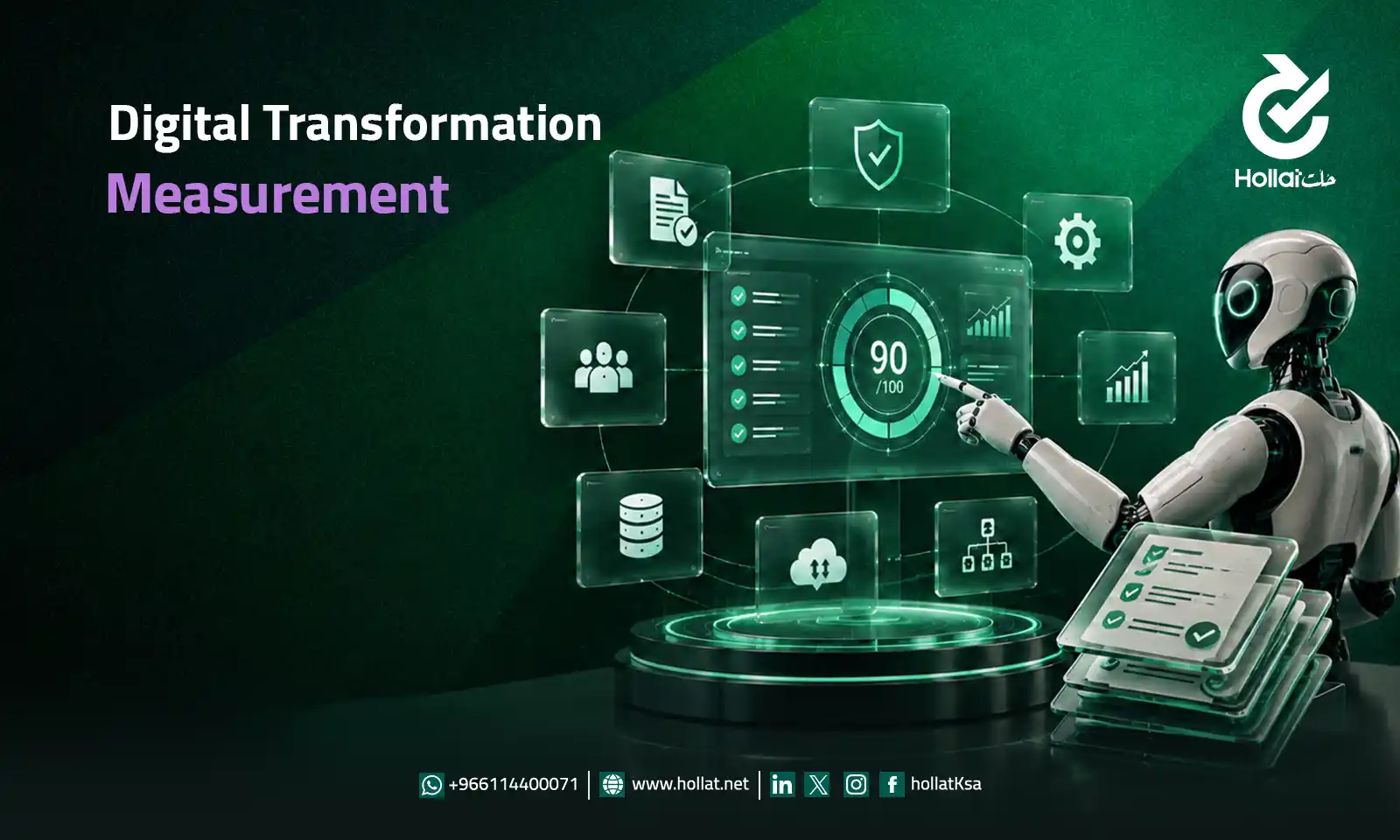
digital transformation measurement is not a once-a-year performance score for Saudi government entities. It is a framework used to evaluate how effectively an organization is implementing digital transformation principles, developing digital capabilities, improving government services, and tracking progress against applicable standards. The Digital Government Authority uses its measurement framework to help government entities assess their current state and monitor progress toward the required practices and standards.
Organizations preparing for future assessments need to stay informed about changes to the applicable framework. Recent updates have placed greater emphasis on areas such as operational readiness, integration, evidence, service availability, and continuous improvement. A practical preparation model therefore requires entities to maintain measurable performance and clear operational evidence throughout the year.
Why Is Digital Transformation Measurement Crucial?
Digital transformation measurement provides structure for government entities’ readiness rather than focusing on individual departments alone. It helps assess compliance with applicable standards and identify areas that require attention.
In 2024, the framework consisted of 10 perspectives, 23 axes, and 96 standards. The covered areas included strategy and organizational culture, operations, risk management and business continuity, information technology, government-wide platforms, channels and services, beneficiary-centric practices, government data, and research and innovation.
This framework makes digital transformation broader than an IT project. Technology needs to work alongside governance, processes, people, data, service delivery, and beneficiary needs.
For a government entity, the question is not simply whether a digital solution exists. The important questions are whether it supports the right process, produces measurable evidence, and helps the entity monitor and improve performance.
Need to assess your current readiness? Contact our team to discuss the gaps between your existing operations and your digital transformation objectives.
Key Updates in Digital Transformation Measurement 2025 vs. 2024
The 2025 framework introduced updates to the digital transformation measurement criteria, including changes to digital transformation standards and requirements related to platform and service integration and service availability. The revised framework should be reviewed independently rather than assuming that evidence or documentation from a previous measurement cycle remains sufficient.
Because the number and wording of standards can change between measurement cycles, entities should always work from the latest applicable DGA framework and evidence requirements.
Adjustments in Criteria and Structure
A change in the number of standards does not necessarily mean that the framework has become less demanding. Measurement criteria can be revised to reflect changing priorities in digital government.
Entities should therefore review the current standards and evidence requirements rather than relying on documentation prepared for a previous cycle. This helps ensure that policies, operational records, reports, approvals, and performance evidence remain relevant to the applicable assessment criteria.
Major Updates in Core Pillars
A key focus of recent digital government developments has been greater integration and reduced fragmentation. Requirements related to platform integration, service availability, and connected digital experiences reflect a broader move away from isolated digital services toward more connected government ecosystems.
Entities therefore need to consider whether their platforms, workflows, communication channels, and data environments can work together rather than operating as separate systems.
Expansion of Entities Subject to Measurement
The measurement environment continues to involve a broad range of government entities, making continuous readiness increasingly important. Organizations should not treat preparation as a short-term exercise immediately before an assessment cycle.
An effective readiness model keeps policies, reports, approvals, operational records, and performance evidence current throughout the year.
How AI Transforms Digital Transformation Measurement Readiness
Our company has created the smart assistant called HAIAT AI, who can assist the service teams in accessing information, organizing requests and speeding up routine communication. It becomes more valuable in conjunction with other structured workflows and customer service data, all of which it can use to complement.
Khaled’s Digital Transformation Measurement Challenge
Khaled wanted to improve his organization’s readiness for digital transformation measurement by making service operations more connected, measurable, and easier to monitor. The challenge was not simply adopting another digital tool. His teams needed a clearer way to manage requests, coordinate communication, monitor service performance, and maintain the operational evidence generated through these activities.
Hollat helped address this need through a connected service environment. Platform can organize service requests, route them through defined workflows, and track their progress from intake to resolution. Masar can support correspondence, approvals, electronic workflows, and archiving, while Monitor provides visibility into service and infrastructure monitoring performance.
HAIAT AI, Hollat’s internally developed smart assistant, can further support service teams by helping categorize requests, suggest routing, draft responses, and retrieve relevant information while keeping human review in the process. Assets can connect operational requests with asset and maintenance activities, while Survey can collect beneficiary feedback after service delivery.
This connected approach gives Khaled a clearer operational record across the service journey. Instead of preparing evidence manually from disconnected systems, teams can use their day-to-day service activity, monitoring records, workflow history, and feedback as part of a more continuous readiness model.
Hollat Success Stories Advancing Digital Transformation Measurement
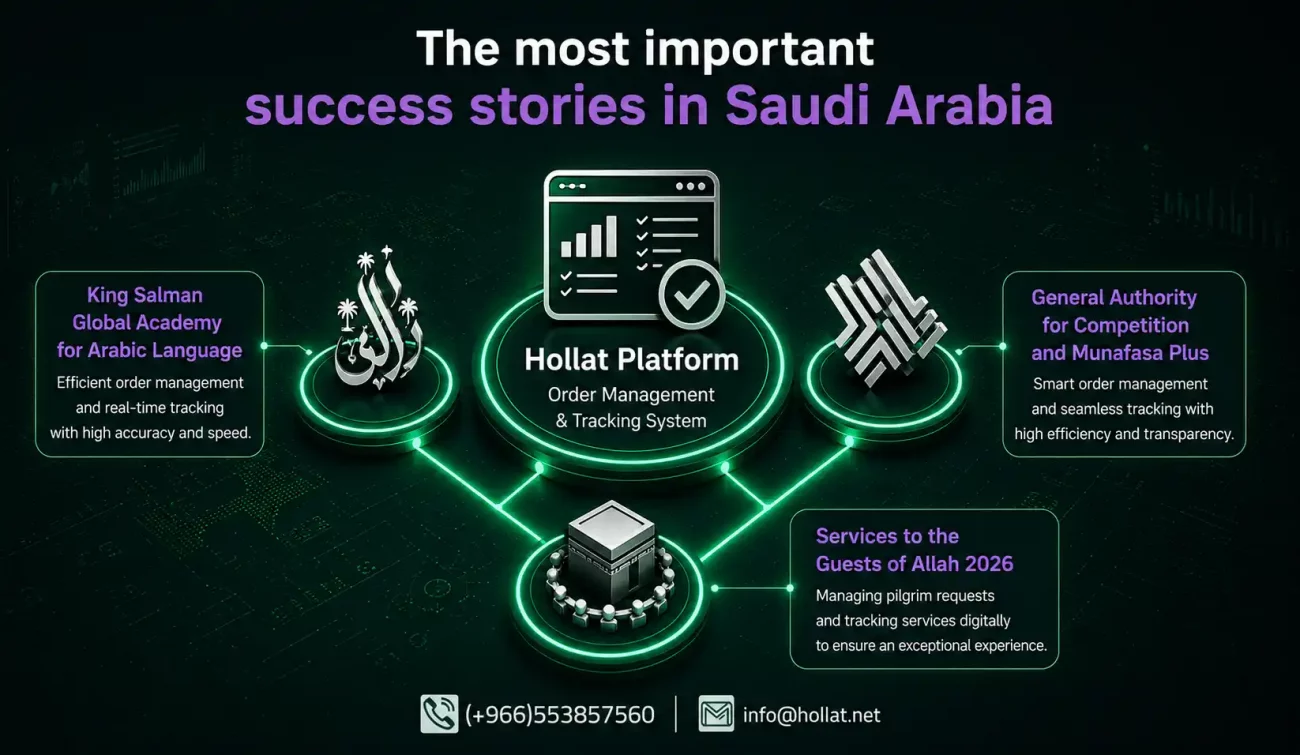
Our work at various institutions in Saudi Arabia offers real-life examples of how digitally connected operations can help to achieve transformation objectives. In environments where service visibility is important, the platform offers all the tools for customer service, workflow automation, communication, monitoring, reporting, and AI support.
King Salman Global Academy for Arabic Language
The King Salman Global Academy for Arabic Language communicates with its customers in a modern environment of the contact center. A central approach can be useful to improve the visibility of interactions and enables teams to handle requests more uniformly throughout service operations.
This kind of environment provides for a better operational path on requests, responses, and service activities for an entity in its journey to becom٢e more measurement ready.
General Authority for Competition and Munafasa Plus
Through our technology, Munafasa Plus enables digital communication and service for the General Authority for Competition users. It helps coordinate requests and communications via various channels, thus providing teams with a higher visibility in their interactions with services.
This is where multichannel support becomes more than just a customer service tool. By linking interactions from multiple channels, teams are able to have a more comprehensive picture of the request and how it’s progressing.
Services to the Guests of Allah 2026
Services supporting the Guests of Allah 2026 require systems capable of handling significant interaction volumes and maintaining service visibility during periods of high demand.
Our platform supports centralized request management and multichannel communication, providing a practical foundation for organizations handling large-scale public service operations.
Other products can contribute to the same operational environment. Masar supports correspondence and digital workflows, while monitoring capabilities help organizations maintain visibility over service and infrastructure performance. Together, these tools can help transform disconnected operational activities into measurable processes.
If your organization is still managing requests, correspondence, and operational monitoring through disconnected tools, contact our team to explore a more unified approach.
How Can Hollat Help Your Organization Meet the 2026 Standards?
The process for preparing for the next measurement cycle should start with the current situation of your operations. Organisations need to understand what processes generate the evidence needed against the relevant standards and where there is a lack of evidence due to manual processes, disjointed systems or limited reporting.
The practical readiness approach can encompass:
- Identifying critical services and workflows for these services.
- Linking communication facilities in a single operational area.
- Automating the routing and escalation of requests.
- Monitoring of infrastructure and services availability.
- Monitoring the performance of SLA and resolution times.
- Using AI to support service teams and information retrieval
- Ensuring that operating evidence and reports are organised
- Collecting feedback from the beneficiaries and ongoing service digital transformation challenges
How Technology Supports Continuous Readiness
Several of these capabilities can be combined on our platform. While teams transitioning between disparate services, service management, workflow automation, multichannel communication, monitoring, reporting, and AI features can all work together.
This means that when he submits a request, tracks it up, and communicates via other means, he will get a more connected experience with Khaled. Management—more transparency of the system after the request.
The aim is to assert that a technology platform does not achieve a higher measurement result. Compliance remains subject to the governance, policies, implementation, evidence and application of the entity to the applicable standards. Technology is meant to connect those processes and make them measurable and manageable.evidence,
The documents in this framework outline the path forward: improved integration, new requirements, and new focuses on current government capabilities. What entities create a culture of continuous readiness will come out ahead for future cycles.
Looking to check your digital transformation maturity? Let our team help you with a real conversation on services, processes, monitoring, and reporting.
Frequently Asked Questions
What are the 7 pillars of digital transformation?
There are no one-size-fits-all seven pillars. The shared frameworks include strategy, technology, data, processes, people, customer experience, and governance. Saudi government entities should use the applicable DGA framework, as it includes specific perspectives, axes, standards, and evidence requirements.
What are the four types of digital transformation?
The most widely talked about four are business process transformation, business model transformation, domain transformation, and cultural/organizational transformation. While the exact terms may vary, the concept remains the same: transformation can impact processes, operating models, products or services, and organizational capabilities.
Is business continuity included in the DGA digital transformation measurement criteria?
Yes. But the business continuity aspect of the DGA is explicitly mentioned under the risk management and business continuity perspective. Resilience is part of the digital transformation evaluation: the 2024 framework provided for a separate section for Risk Management and Business Continuity.
What are the 6 core elements of digital transformation?
The six elements of a practical model are strategy, people, processes, technology, data and customer/beneficiary experience. These are not to replace the criteria of the DGA. Saudi entities should determine their readiness in light of the standards and evidence required.
What is the difference between digital transformation measurement and the Digital Experience Maturity Index?
Digital transformation measurement is an assessment of the overall compliance and development of an entity in digital government. Digital transformation Index is specifically on the maturity of digital government platforms and services, such as beneficiary satisfaction, user experience, complaints handling and technologies and tools.