


Workflow Management Systems | Public Sector Operations

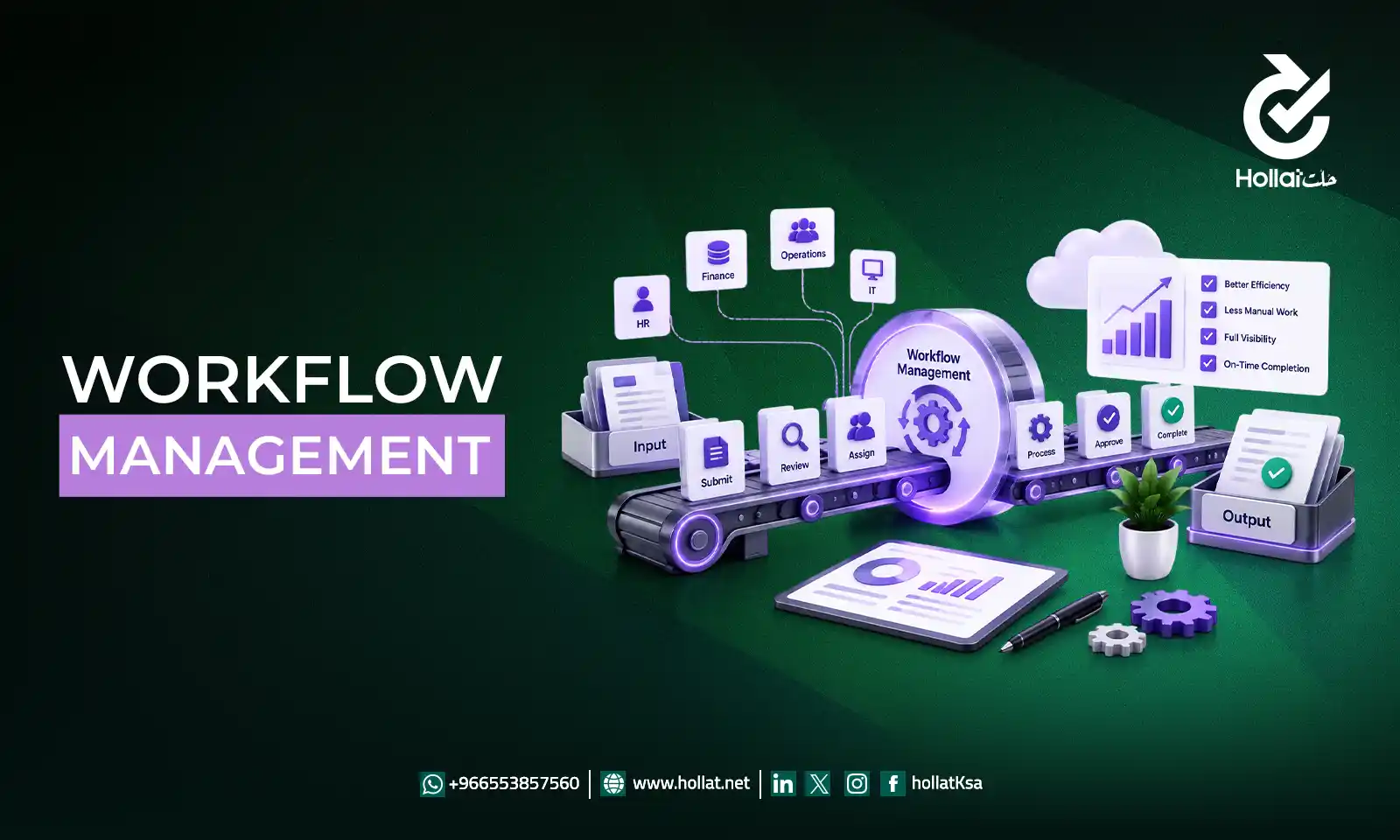
Workflow Management enables government bodies to organize, automate, and track the workflows used in the delivery of their public services and day-to-day operations. Effective workflow management can decrease the amount of manual work, gain visibility into processes and enable workers to process requests more consistently as the management of digital transformation continues at a lot of Saudi institutions.
A modern workflow management system can integrate tasks, approvals, departments and existing applications in a structured, digital environment. This enables government organizations to enhance the efficiency of their operations while ensuring that they have adequate security, accountability and control over sensitive data.
What is workflow management?
Workflow management is the design, organization, Automation Help Desk and monitoring of the workflow or sequence of activities needed to complete a business or Government process.
A workflow is a sequence of events, who takes which steps, what requirements must be fulfilled, and what will follow. A workflow management platform can automate these steps rather than sending out emails, paper forms, spreadsheets or calling people back to do the same.
Importance of Workflow Management in Government Operations
Government agencies typically have a lot of departments, employees, systems and approval levels in complex processes. If workflows are not defined, requests may get lost, accountability may be unclear, and managers might lack insight into how things are going.
These challenges can be overcome with effective workflow management by defining clear rules for the workflow.
The following tips can be helpful for government entities:
- Standardize service procedures.
- Minimize repetitive movements.
- Improve response times.
- Monitor requests for tracks from submission to completion.
- Clarify employee responsibilities.
- Monitor service-level agreements.
- Improve accountability.
- Collect information to support decisions.
Key Features of an Effective Workflow Management System
The standard workflow management system ought to offer more than just task assignment. Flexibility, system integration, monitoring, and robust security controls are crucial in government environments.
Task Automation and Process Routing
Task automation enables repetitive tasks to be performed based on the rules. The system can automatically route requests to employees, departments, and others, depending on request type, priority, location, and more.
The action taken on a task when it is delayed or when it needs further approval can be also determined by routing rules.
Real-Time Monitoring and Reporting
Managers require access to workflow performance information to help them understand the bottlenecks and make improvements.
A modern information system can deliver dashboards that display:
- Open and completed requests.
- Pending tasks.
- Processing times.
- SLA performance.
- Employee workloads.
- Escalated cases.
- Workflow volumes.
Integration with Existing Government Platforms
There are several applications which are generally used by government institutions to deal with various functions. A workflow platform should thus be able to connect to the existing systems.
Integration can help information flow from one application to another without having to re-enter the same data by employees.
It is especially essential when applying a process management system KSA in an organization that already has a technology environment and legacy applications.
Data Security and Access Control
Government workflows may include, but are not limited to, confidential employee information, citizen information, financial information or administrative information. Therefore, security needs to be integrated into the design of the workflow.
The role-based access controls can restrict access to certain information or certain tasks for employees.
Benefits of workflow management
The benefits of workflow management can be realized through operational, administrative and service processes.
Greater Operational Efficiency
Automating repetitive tasks will reduce the amount of manual coordination that will be required from the staff. Processes can be transferred from one stage to another without delay and with no need for unnecessary follow-ups.
Faster Service Delivery
Requests can be sent directly to the right team and notifications and escalations can be automated to minimise delays.
Better Accountability
A digital workflow documents actions, assignments, approvals, and the status. This information can guide managers in identifying delays and the person responsible for each.
Improved Resource Utilization
Managers can track workload, and determine who or which departments may be getting too much demand. This information can aid in improved resource allocation.
More Consistent Processes
Standardised workflows guarantee that identical requests are processed in the same way. This can help minimise differences due to individual working styles.
Data-Driven Improvement
Performance reports can show information to be used for process improvement, service leveling and identification of bottlenecks in the future.
If you’re looking to implement digital workflow solutions, workflow management can be part of a broader digital transformation initiative, not just a digital workflow automation solution.
Overcoming workflow management challenges
There are a number of challenges in implementing workflow management, especially in large public sector organisations.
Resistance to Change
There could be workflows that are already in place that employees are used to. Improved adoption can be achieved through training, communication and user involvement.
Complex Processes
There are workflows in some government departments that require a lot of approvals, exceptions and departments. Before trying to automate any of these processes, they should first be mapped and simplified.
Legacy Technology
It can be difficult to integrate older systems with modern ones. Addressing this challenge can be done through integration planning and appropriate APIs or connectors.
Data Quality
Accurate information is critical to automated workflows. Existing data should be checked and clear guidelines should be developed for data maintenance.
Security Requirements
Government institutions must put in place the right access and security protocols before putting sensitive workflows into a digital environment.
These challenges may be addressed through a phased implementation. It’s best to start with high volume, repetitive or timely processes so that the teams can prove the value before rolling out workflow management across other departments.
Hollat Platform Achieving Excellence Across Saudi Institutions
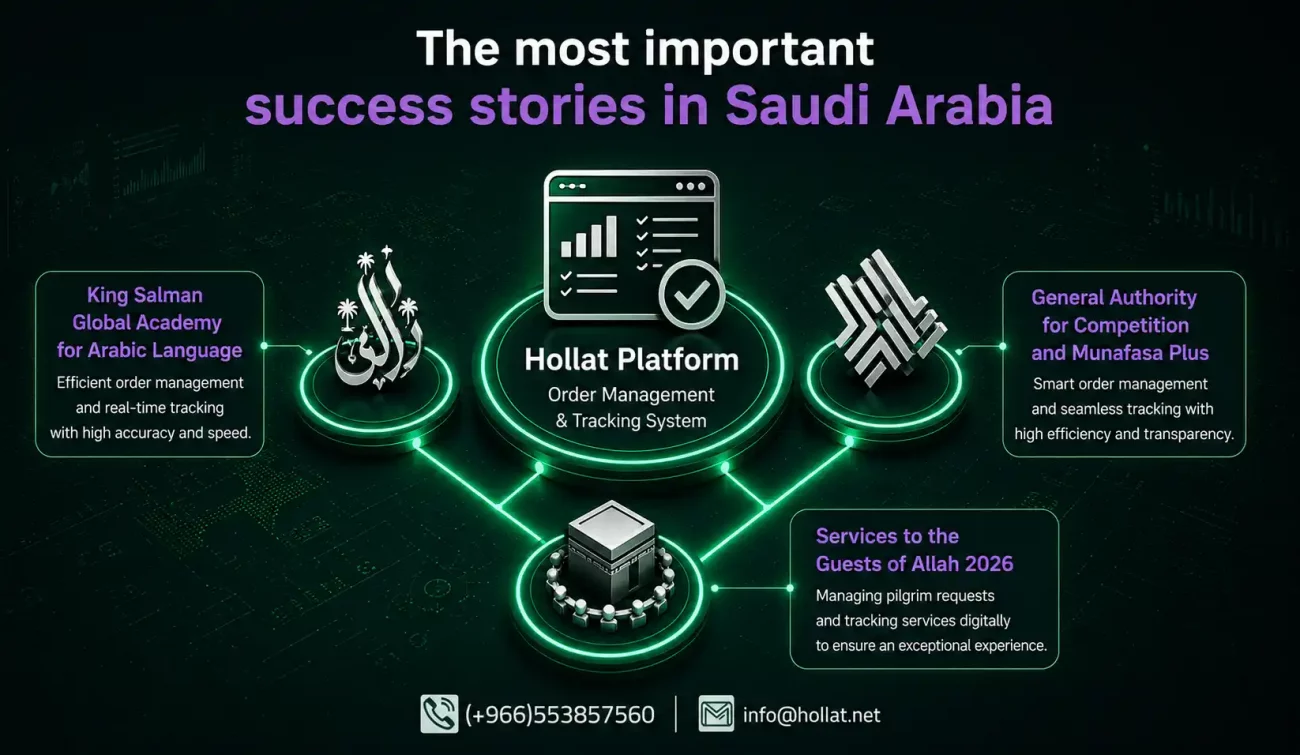
Hollat offers digital solutions that enable workflow automation, service management, customer interactions, request management, and visibility in Saudi organizations.
Its platform can enable institutions to build processes that incorporate automated routing, task assignments, approvals, notifications, SLA monitoring, reporting and integration.
King Salman Global Academy for Arabic Language
Hollat mentions its partnership with the King Salman Global Academy for Arabic Language as one of its digital solutions to institutional workflows.
Digital processes can support companies in handling requests and approvals more systematically, increase coordination between departments and offer transparency on the activities in the processes.
General Authority for Competition and Munafasa Plus
Hollat also mentions Munafa Plus to tie up with General Authority for Competition. Digital workflows can help to manage service requests and interactions, and offer structured workflow tracking and processing activities.
The use of this kind of implementation is an example of how an automation platform can help public sector bodies with complex digital services.
Services to the Guests of Allah 2026
Hollat has also highlighted digital services supporting the Guests of Allah in 2026. Large-scale initiatives involving pilgrims require efficient coordination, rapid service response, and the ability to handle significant volumes of interactions.
Workflow management can help connect service channels, route requests to relevant teams, track progress, and provide operational visibility during high-demand periods.
These applications demonstrate how workflow technology can support different types of Saudi institutions while adapting to their individual operational requirements.
Hollat is the Trusted Partner for Workflow Management Solutions
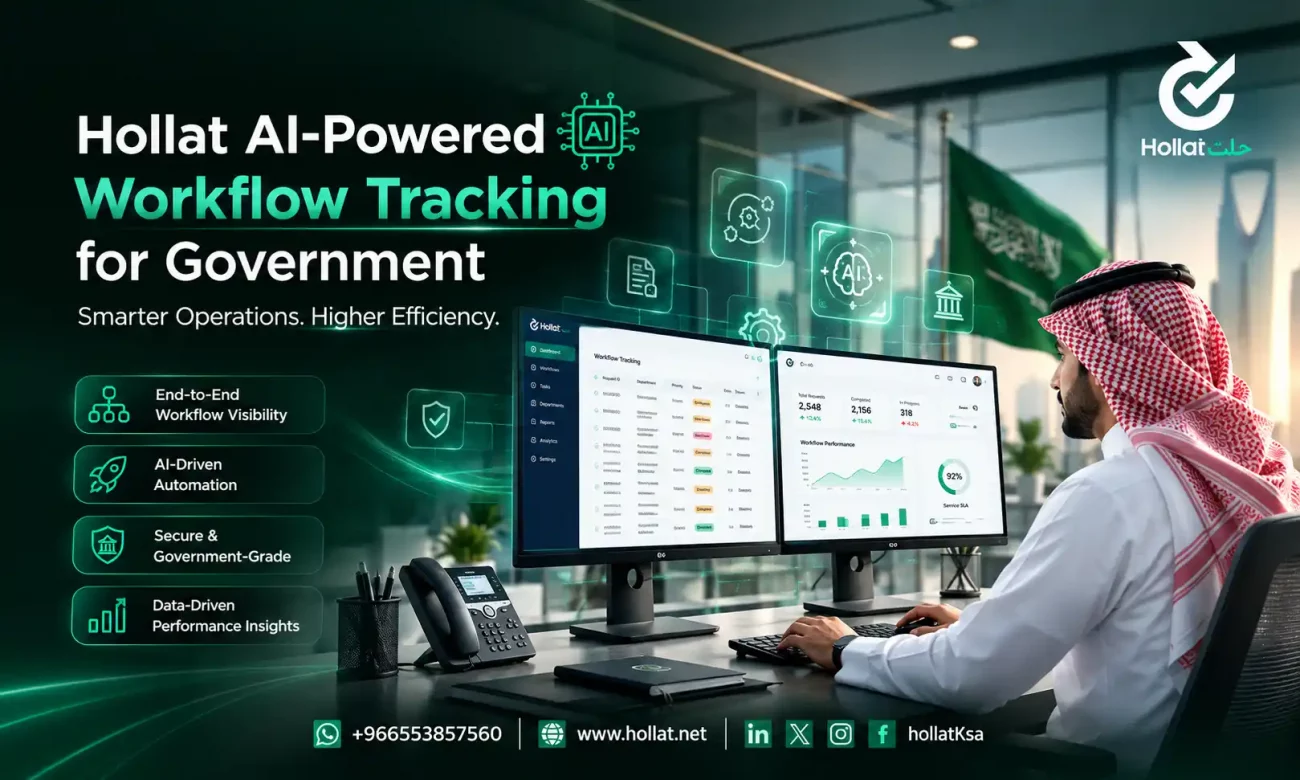
Hollat provides a unified platform for organizations seeking to improve workflow management, service delivery, and operational efficiency. Its capabilities can support configurable workflows, automated task routing, request management, SLA monitoring, analytics, integrations, and multi-channel interactions.
For public-sector organizations, an effective solution should be flexible enough to accommodate different departments, processes, approval structures, and service requirements.
Hollat can help organizations move from fragmented manual procedures toward structured digital processes. Instead of relying on employees to manually track every request, the platform can automate routing, notifications, assignments, and escalation according to predefined rules.
The platform can also provide managers with performance data that helps identify bottlenecks and evaluate process efficiency.
For organizations pursuing digital transformation, workflow management provides a practical connection between technology and operational improvement. By combining automation, process visibility, integration, and analytics, government institutions can create more efficient and accountable services.
Contact Hollat
Contact Hollat today to discover workflow management solutions designed to improve government operations, automate processes, and deliver more efficient digital services.
FAQs
What is the difference between workflow management and BPM?
Workflow management focuses primarily on organizing and controlling the sequence of tasks within a specific process. Business Process Management, or BPM, is broader and includes analyzing, designing, implementing, monitoring, and continuously improving business processes. Workflow management can therefore be an important component of a wider BPM strategy.
Are workflow management systems secure for government use?
Yes, workflow management systems can be designed for government environments with appropriate security controls. Role-based access, authentication, permissions, encryption, activity logs, and secure integrations can help protect sensitive information and control access to workflow data.
How long does it take to implement a workflow system?
Implementation time depends on workflow complexity, organizational size, integrations, customization, security requirements, and the number of processes being automated. A simple workflow may be implemented relatively quickly, while a large government implementation may require a phased approach over several months.
Can workflow systems integrate with legacy systems?
Yes, workflow platforms can integrate with existing and legacy systems when appropriate integration methods are available. APIs, connectors, middleware, or other integration technologies can allow information to move between systems and reduce repetitive manual data entry. The exact approach depends on the architecture and capabilities of the existing applications.