


How Business Process Management Improves Efficiency

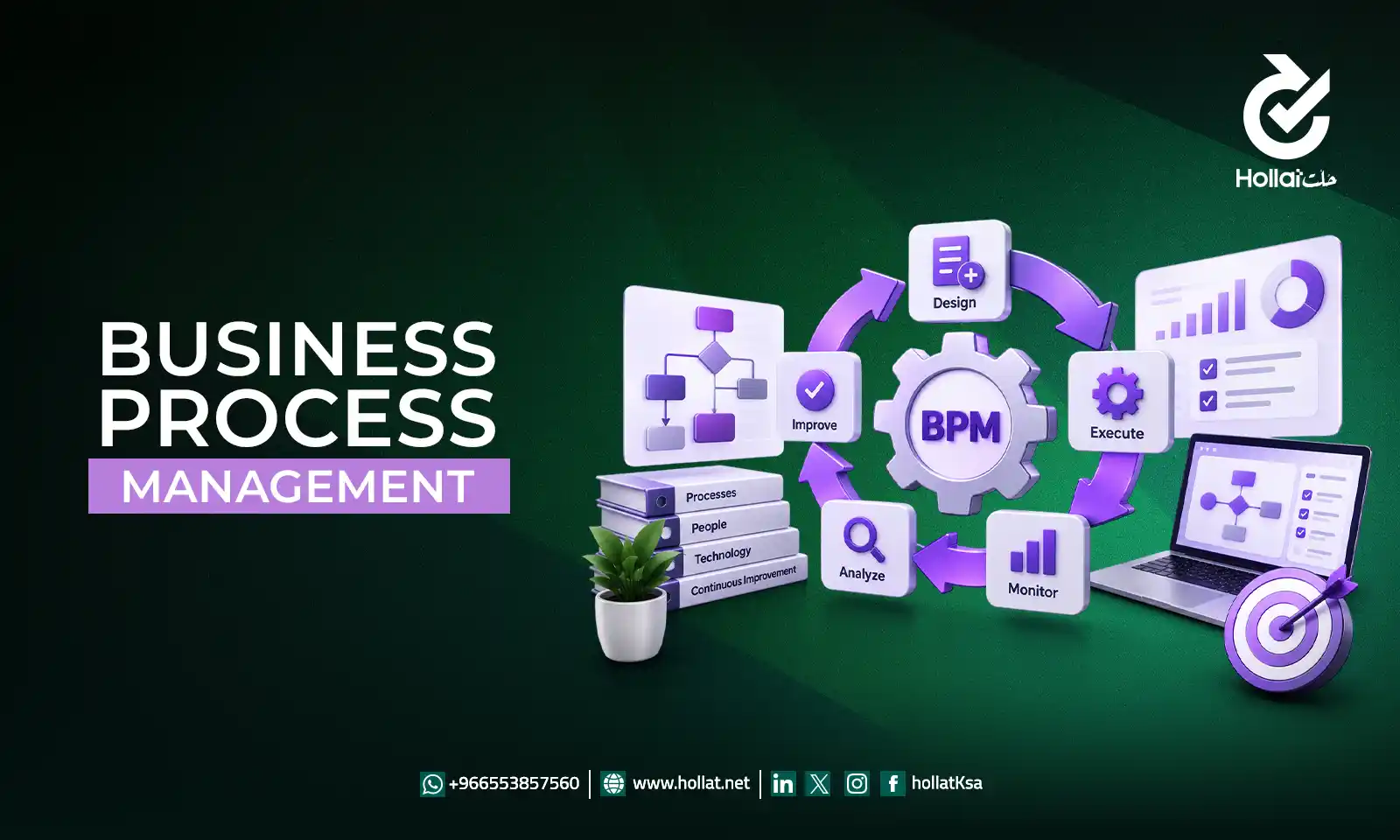
business process management (BPM) is a systematic way of analysing, designing, automating, monitoring and continuously improving business processes. Effective process management has become vital for Saudi organisations to minimize delays, enhance service quality, boost productivity and provide better visibility across departments in their digital transformation drive.
Organizations can standardize business processes and coordinate tasks instead of depending on unstructured spreadsheets, emails, manual approvals, and repetitive data entry with a structured Business process management system.
Today’s platforms also allow service requests, approvals, customer interactions, and operational information to be centralized and shared in a single environment, enabling organizations to reach decisions faster and better.
What is Business Process Management BPM?
BPM, also known as Business Process Management, is a management field that concentrates on optimizing organizations’ business processes. It explores the beginning of a process, who or what is involved in a process, how decisions are reached, and the end of a process.
Common elements of a BPM approach are:
- Mapping existing business processes.
- Discerning unneeded steps and delays.
- Establishing responsibilities and approval procedures.
- Standardizing workflows.
- Automating repetitive activities.
- Monitoring process performance.
- Continuously improving processes based on data.
Benefits of business process management
Business Process Management offers benefits.There are benefits of Business Process Management.
By standardizing workflows, enhancing visibility, and eliminating redundant manual tasks, BPM boosts efficiency and streamlines operations. Key benefits include:
- Better Efficiency: Streamlined working processes minimize delays, duplication and confusion.
- Reduced Errors: Automation reduces repetitive data entry and reduces manual errors.
- Quick Processing: Automated task approvals, notifications and assignments accelerate processing.
- Increased Visibility: Dashboards and reports give real-time process and performance visibility.
- Enhanced Customer Experience: Standardised and traceable processes aid in quick response times and service quality.
- Simpler Scalability: Standardized workflows can grow as your organization expands.
What are the three types of BPM?
There are various ways to classify BPM, such as by the systems, people, and information involved in the process. There are three popular choices: integration-centric BPM, human-centric BPM and document-centric BPM.
Integration-Centric BPM
Integration-centric BPM emphasizes those processes that rely on communication across software systems. The goal is to automatically link applications and transfer data between applications.
For instance, when a customer requests a particular information, it could be required from a CRM, financial system, inventory system, or service management platform. Integration can eliminate data duplication of information for employees.
Human-Centric BPM
Human-centric BPM means processes in which people make decisions, approve or review, or do something else.
These can include employee requests, management approvals, customer service cases, and internal workflows. The system can assign tasks, set deadlines, send notifications and monitor progress, and keep people involved where judgement is needed.
Document-Centric BPM
BPM is about documents: documents are created, reviewed, approved, stored, or distributed in the course of processes.
Organizations can cut down on paper work and ensure that documents go through the proper approval process using digital document workflow. This is particularly helpful with contracts, applications, reports, forms, and other business documents.
Business Process Management Across Industries
BPM is not limited to a particular sector. Process management can solve various issues for different organizations.
Government and Public Secto
Gov organizations have numerous requests, approvals, applications and services that involve several departments and stakeholders. BPM can streamline these processes and gain visibility throughout the service delivery.
For a public sector organization, government automation can help accelerate the routing of requests, digitize the approval process, manage SLAs, and provide a centralized administration of services. These features add to the government’s overall digital transformation by streamlining and automating manual workflows, creating digital processes, and improving the experience for its citizens.
Healthcare and Education
Healthcare companies can utilize BPM to control administrative requests, patient-related workflows, approvals, internal services, and inter-departmental interaction.
BPM can be used in educational institutions for admissions, student services, employee requests, approval, and administrative processes. Employees and service users will be more visible and processing times will be shortened by implementing standardized work processes.
Enterprises and SMEs
For large enterprises, BPM may be required to handle complex processes that involve various departments, systems, and locations. Another advantage of process management for SMEs is that it can help them standardize processes before complexity sets in.
In the context of Digital transformation solutions Saudi Arabia, BPM can help growing companies establish a basis for integrating processes, people, data, and technology around shared business goals.
Hallet’s Impact on Digital Transformation Across Saudi Arabia
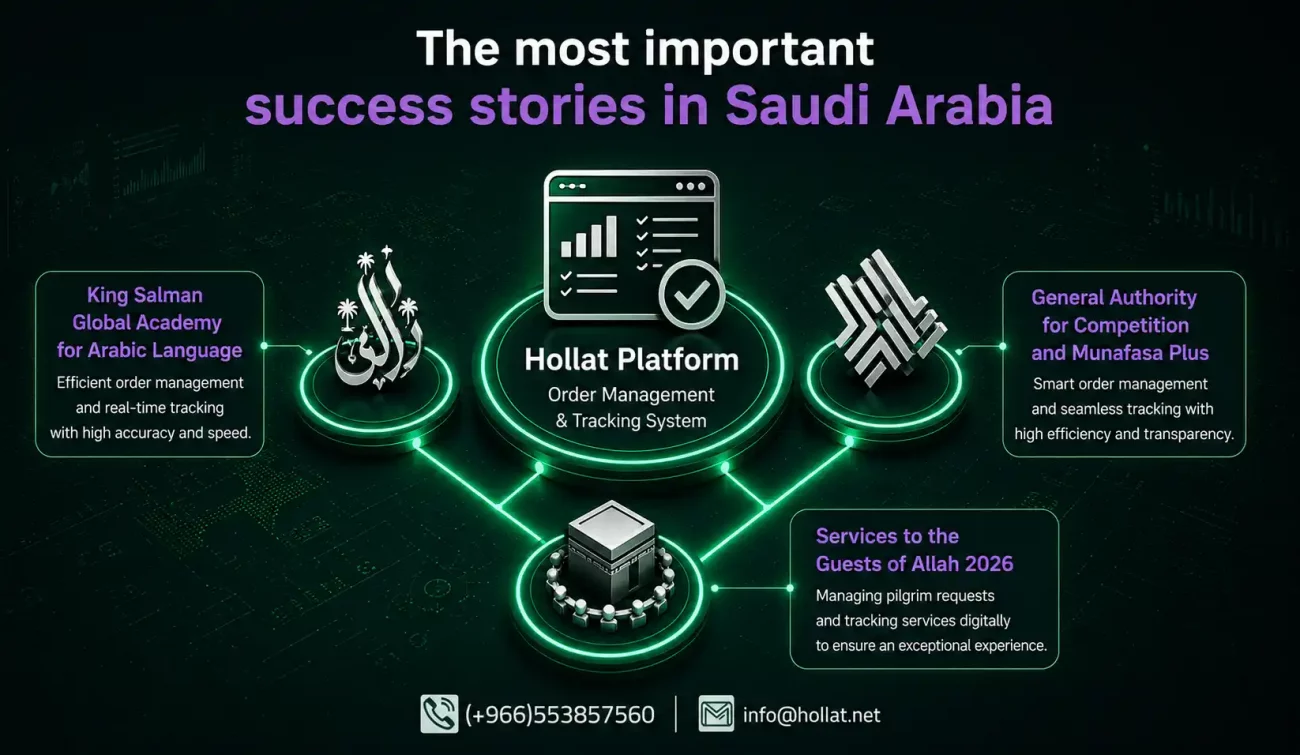
Our platform provides services for organisations in Saudi Arabia using a single platform to manage services, automate workflows, manage customer interactions and manage operational processes. The platform features configurable workflows, request management, multi-channel interaction, analytics and integrations for organizational scale operations.
King Salman Global Academy for Arabic Language
The project supporting the King Salman Global Academy for Arabic Language, through workflow automation, is a key project that Hollat is working on, the initiative was highlighted.The project of supporting the King Salman Global Academy for Arabic Language with workflow automation was mentioned as one of the key projects that Our platform is carrying out. This type of environment can benefit from digitalized internal processes, more streamlined approvals and better coordination between various departments and stakeholders.
General Authority for Competition and Munafasa Plus
Hollat also points out the General Authority for Competition’s website, Our platform’s Munafasa Plus, which is an example of digital service delivery. As the volume of services gets bigger and bigger, workflow automation can help track, process, provide transparency, and communicate with the beneficiaries.
Services to the guests of Allah 2026
Hollat also announced the digital system to support pilgrims in the context of the Guests of Allah Program 2026. The project is about digital transformation for government and a single support to pilgrims and visitors in the fields of coordination of services and operational visibility, in times of high level of demand.
The examples illustrate the potential of workflow and process management for institutions of differing sizes and in a variety of settings, including those in the institutional sectors and public-sector initiatives of any size.
The Best Business Process Management Solutions?
The best BPM solution should not simply provide automation. It should help an organization understand its processes, configure workflows, manage requests, connect teams, and measure performance.
Our platform provides a unified platform designed to manage services and operations at an organizational level. Its capabilities include workflow automation, service management, multi-channel interaction, request management, customizable workflows, SLA management, dashboards, analytics, and integrations.
The platform can receive requests from channels such as WhatsApp, email, web forms, contact centers, and other digital channels and bring them into a unified operational workflow. It can also classify requests, assign priorities, route cases, track SLAs, and provide performance insights.
For organizations evaluating an automation platform, the most important consideration is whether the solution can adapt to actual business processes rather than forcing teams into rigid workflows.
Our platform’s configurable approach allows organizations to design workflows, approval paths, routing rules, and service-level requirements around their operational needs. This makes BPM a practical component of wider digital transformation rather than a separate technology initiative.
Contact Hollat Today
Looking to optimize business workflow and quicken digital transformation? Talk to Hollat about customized business process management solutions for your organization.
Contact us today and make your workflows faster, smarter and more efficient.
FAQs
What are the 7 steps of the business process?
A practical BPM lifecycle can include identifying the process, mapping the current workflow, analyzing problems, redesigning the process, implementing changes, monitoring performance, and continuously improving it. The exact terminology can vary between BPM frameworks, but the central idea is continuous process improvement.
What is the difference between BPM and workflow automation?
BPM is a broader discipline that analyzes, designs, manages, monitors, and improves business processes. Workflow automation focuses primarily on using technology to execute specific process steps automatically. Automation can therefore be one component of a broader BPM strategy.
Is BPM suitable for small and medium businesses?
Yes. SMEs can use BPM to standardize repetitive processes, clarify responsibilities, reduce manual work, and improve operational visibility. Starting with high-volume or repetitive processes can allow smaller organizations to gain value without attempting to transform every workflow simultaneously.
How long does it take to implement BPM?
Implementation time depends on the number and complexity of processes, integrations, customization requirements, organizational size, and stakeholder involvement. Smaller projects can take weeks, while broader enterprise implementations may require several months. A phased implementation can help organizations achieve results progressively.