


ITSM Implementation Benefits with Hollat in Saudi Arabia

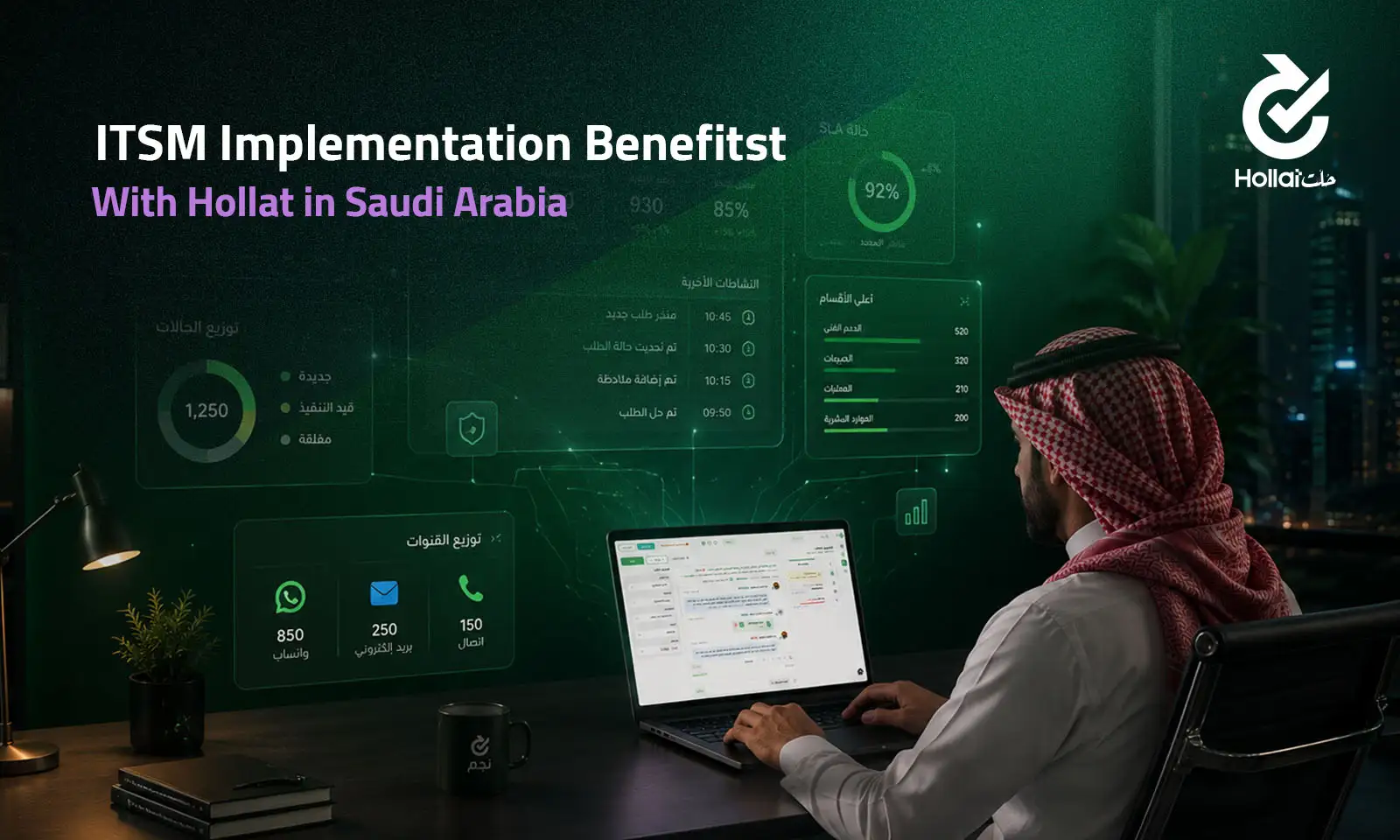
Effective IT service management is now a key business requirement as organisations around Saudi Arabia speed up their digital efforts. By implementing itsm, companies can streamline IT operations, enhance service delivery, and ensure that technology aligns with business goals. From digital transformation to IT modernization, from customer experience to large-scale IT projects, a structured IT service management framework brings value to an organization.
As companies seek to optimize their IT operations and deliver high-quality service, they’re increasingly turning to ITSM software and contemporary service management practices. As technology innovation plays a significant role in the national development in Saudi Arabia, it is crucial to take a professional approach to IT service management for sustainable growth.
ITSM Implementation: A Complete Guide for Saudi Businesses 2026
ITSM implementation is the design, deployment, and optimization of IT service management practices in an organization. To enhance the delivery, monitoring and ongoing improvement of IT services.
Today’s businesses rely on IT services to run their day-to-day activities smoothly. A structured itsm implementation guarantees that service requests, incidents, changes and problem management processes are dealt with effectively. It also offers more transparency about the performance and quality of IT services.
IT service management is the basis of organizations’ Digital transformation KSA initiatives to achieve operational excellence, better governance, and higher customer satisfaction.
Key Stages of ITSM Implementation
The successful implementation of ITSM is based on a defined roadmap for technology, processes, and business goals.
Assessing Business Needs and IT Infrastructure
The initial phase of any ITSM implementation is to assess the current IT operations and determine the IT service management needs. Organizations need to evaluate existing workflows, service issues, infrastructure capacity, and business objectives.
This evaluation provides decision-makers with insight into what needs to be improved and sets a clear path for implementation. Early detection of service gaps can help minimize project risks and enhance deployment results.
Choosing the Right ITSM Framework
Choosing the right framework is one of the most important aspects of implementing itsm. ITIL implementation practices are used by many organizations due to the availability of the global standards of managing the IT services effectively.
The selected framework should be suitable to business objectives, industry needs, compliance regulations and the complexity of the operations. Clarity of the framework brings consistency to IT processes and enhances service quality.
Selecting the Best ITSM Tools
The successful implementation projects of itsm are centered around technology. Today’s ITSM tools can help automate processes, track service performance, monitor incidents, and provide actionable insights.
The key factors to consider when assessing solutions include scalability, integration, ease of use, reporting, and ongoing support needs..
| ITSM Feature | Business Benefit |
| Incident Management | Faster issue resolution |
| Service Request Management | Improved employee productivity |
| Change Management | Reduced operational risk |
| Asset Management | Better resource utilization |
| Performance Reporting | Data-driven decision making |
| Workflow Automation | Increased efficiency |
Deployment and Integration with Existing Systems
The final implementation stage involves the deployment of the chosen solution and its integration with the current business applications.
An itsm implementation needs careful planning to make sure that it is compatible with existing systems. Successful integration reduces disruption and allows organizations to get the most from their technology investments.
Important things to consider during deployment include training employees and creating governance procedures to promote adoption and long-term success.
Benefits of ITSM Implementation for Organizations in Saudi Arabia
A well-designed ITSM solution brings tangible benefits to various aspects of business functionality.
Some of the best advantages are the following:
- Improved service quality and consistency.
- More efficient incident and problem resolution.
- Increased automation for improved operational efficiency.
- Improved visibility of IT performance.
- Increased employee productivity.
- Improved compliance and governance.
- Reduced operational costs.
- Improved alignment of IT and business goals.
Service management frameworks offer the structure for organizations to support growth and innovation in their IT service management initiatives in Saudi Arabia.
Numerous public and private sector companies are also investing in customer service automation to enhance customer experiences and minimize manual tasks. Automating repetitive tasks helps businesses allocate resources for strategic initiatives instead of mundane administrative work.
Furthermore, public sector organizations are being encouraged to adopt modern IT service management solutions due to government automation initiatives. Moreover, government automation initiatives are encouraging the adoption of modern IT service management solutions in public sector organizations. Service management is efficient, which facilitates transparency, accountability, and better service delivery.
Saudi Arabia is committed to investing in digital transformation for government projects, and ITSM frameworks provide a structured approach to ensure long-term success in digital transformation.
Common Challenges in ITSM Implementation
While the benefits are significant, there are a number of challenges that can arise when implementing an ISNS project.
- Resistance to change is one of the most common challenges. Adapting to new processes and technologies can take time and training for the employees. If the communication and stakeholder engagement is not adequate, adoption rates could be lower than desired.
- Process complexity is another hurdle. If the workflow is disjointed, then it can be difficult to standardise the service management procedures throughout the organisation.
- Costs are another factor that may influence itsm implementation, especially when companies try to implement complex solutions without a clear plan. Careful planning and phased deployment strategies help reduce financial risks.
- Legacy system integration issues can occur when integrating new service management platforms with existing platforms. Having successful implementation partners can help overcome technical hurdles and shorten project timelines.
- Last but not least, organizations need to develop continuous practices for measuring performance. The principle of continuous improvement is a fundamental part of effective service management and needs to be monitored and optimised on a regular basis
Hollat is Best for ITSM Implementation in Saudi Arabia
If organizations require a trusted partner in the implementation of ITSM, Hollat provides the skills, tools, and direction to ensure success.
Hollat is a tool for designing and deploying service management solutions that fit the needs of businesses. The company offers end-to-end support throughout the implementation journey, ranging from assessment to planning and deployment to optimization.
The Hollat team is aware of the unique needs of Saudi organizations and creates solutions that are tailored to the local business environment and regulatory requirements. Hollat’s integration of industry best practices and cutting-edge technologies empowers organizations to enhance their service offerings, optimize efficiency, and facilitate digital growth strategies.
From small businesses to government agencies and expanding operations, Hollat offers solutions that can be scaled to meet the needs of any organization and ensure the optimal return on IT investment.
FAQ
What is ITSM implementation and why is it important?
ITSM implementation is the process of establishing structured IT service management Saudi Arabia practices within an organization. It is important because it improves service quality, operational efficiency, governance, and customer satisfaction.
How long does ITSM implementation take in Saudi companies?
The timeline varies depending on organization size, process complexity, and project scope. Small implementations may take a few weeks, while enterprise-level deployments can require several months.
What are the best ITSM tools for small businesses?
The best ITSM tools for small businesses are solutions that offer scalability, automation capabilities, ease of use, and cost-effective deployment options while supporting future growth.
Is ITSM implementation expensive for startups in Saudi Arabia?
The cost of item implementation depends on business requirements, software selection, and deployment scope. Many modern solutions offer flexible pricing models suitable for startups and growing companies.
How does ITSM support digital transformation in KSA?
ITSM implementation supports digital transformation by improving service delivery, automating workflows, enhancing governance, increasing operational efficiency, and enabling organizations to adapt to evolving business needs across Saudi Arabia.