


Power of digital transformation in Driving Business Growth

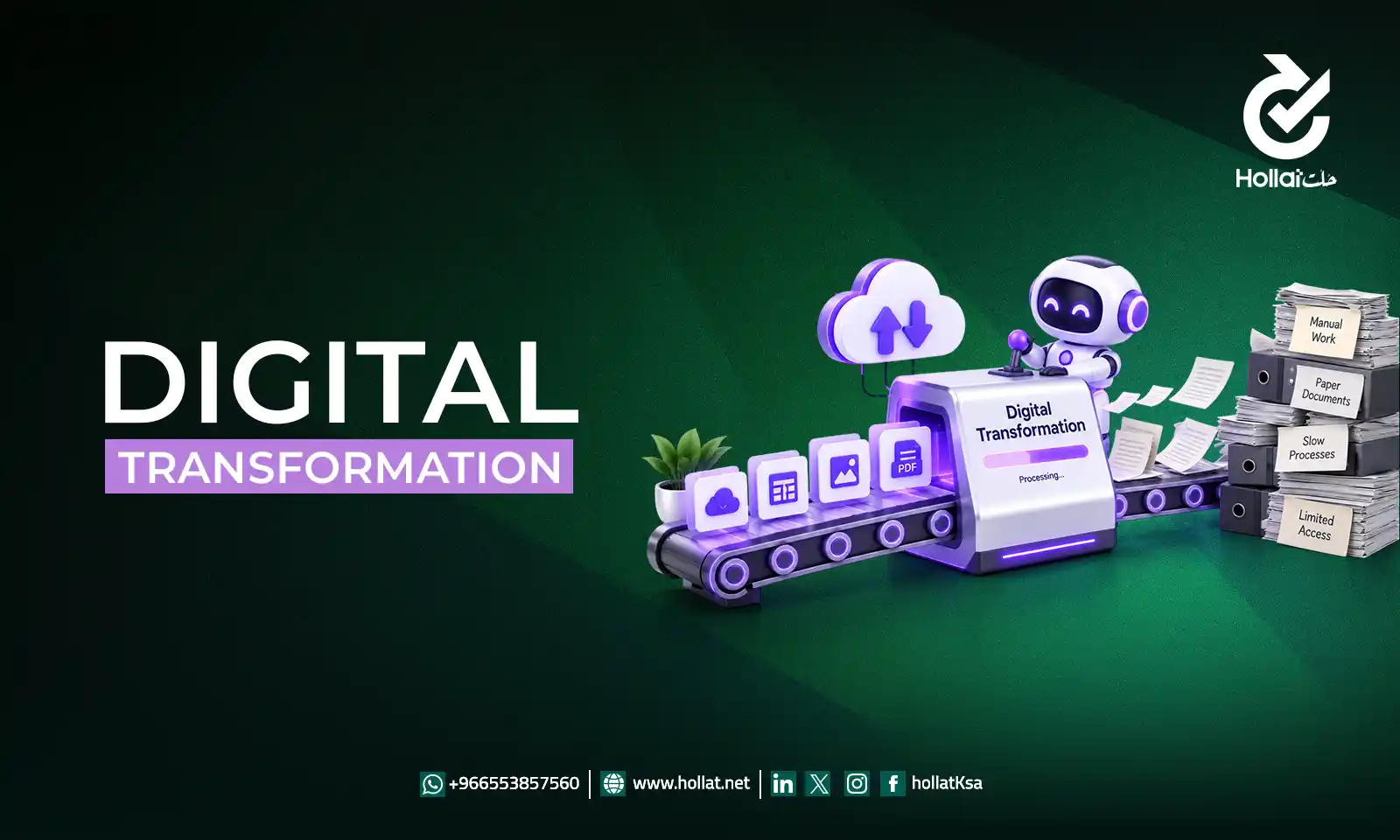
Digital transformation is fundamentally altering the way of doing business, providing services, handling information, and dealing with customers and staff. It’s about more than just a new software or switching from paper to digital forms.
Transformation is all about redesigning processes, linking systems together, leveraging the power of data, and streamlining the delivery of business and government services. Saudi Arabia’s past and current emphasis on technology and innovation is driving organizations in both public and private sectors to move toward modernization and create more connected digital experiences.
What is meant by digital transformation?
Digital transformation is the process of strategically using digital technologies to enhance business processes, services, operations and the overall business model of the organization. Automation, cloud technologies, artificial intelligence, analytics, digital workflows, customer platforms, integrations and other technologies can be included.
It’s not about technology, per se. Organizations should leverage technology to address specific operational problems and to make measurable improvements.
Benefits of Digital Transformation for Organizations
Digital transformation is essential for helping organizations become more efficient, customer centric, transparent and better at decision-making, as well as cutting costs.
- Increased Efficiency: Automation minimises repetitive tasks and accelerates processes.
- Improved Customer Experience: Digital channels offer quicker, easier and uniform services.
- Real-time data provides visibility into processes and performance to increase transparency.
- Better Decisions: Analytics identify trends, bottlenecks and ways to improve.
- Reduce Costs: Automation minimizes manual tasks, paperwork, duplication and inefficiency.
- Better Scalability: Digital processes facilitate growth without scaling up administrative burdens.
- Enhanced Collaboration: Integrated platforms enable teams to communicate and work together more effectively.
Digital transformation offers a basis for long-term growth and stable business processes for businesses looking into business digital solutions Saudi.
How to Implement Digital Transformation Successfully
Digital transformation shouldn’t be viewed as a technology acquisition, but rather as a structured business effort.
- Evaluate Current State: Identify manual tasks, delays, duplicated data, etc., and gaps in the system.
- Establish Clear Objectives: Establish measurable objectives like faster processing times, lower costs, and improved service.
- Focus on Key Processes: Begin with the high volume, repetitive processes or inefficient processes.
- Right Technology: Based on the business needs, choose the solution like CRM, workflow automation, ITSM or analytics.
- Train Employees: Train and support employee use to increase acceptance and decrease resistance.
- Integrate Systems: Link applications together to seamlessly share and move data around.
- Monitor and Improve: Keep an eye on KPIs, collect feedback, and continually optimize digital processes.
This is particularly important for government digital transformation KSA, where services are likely to span more than a single department and stakeholder.
Transforming Saudi Institutions: Hallet Success Stories in Action
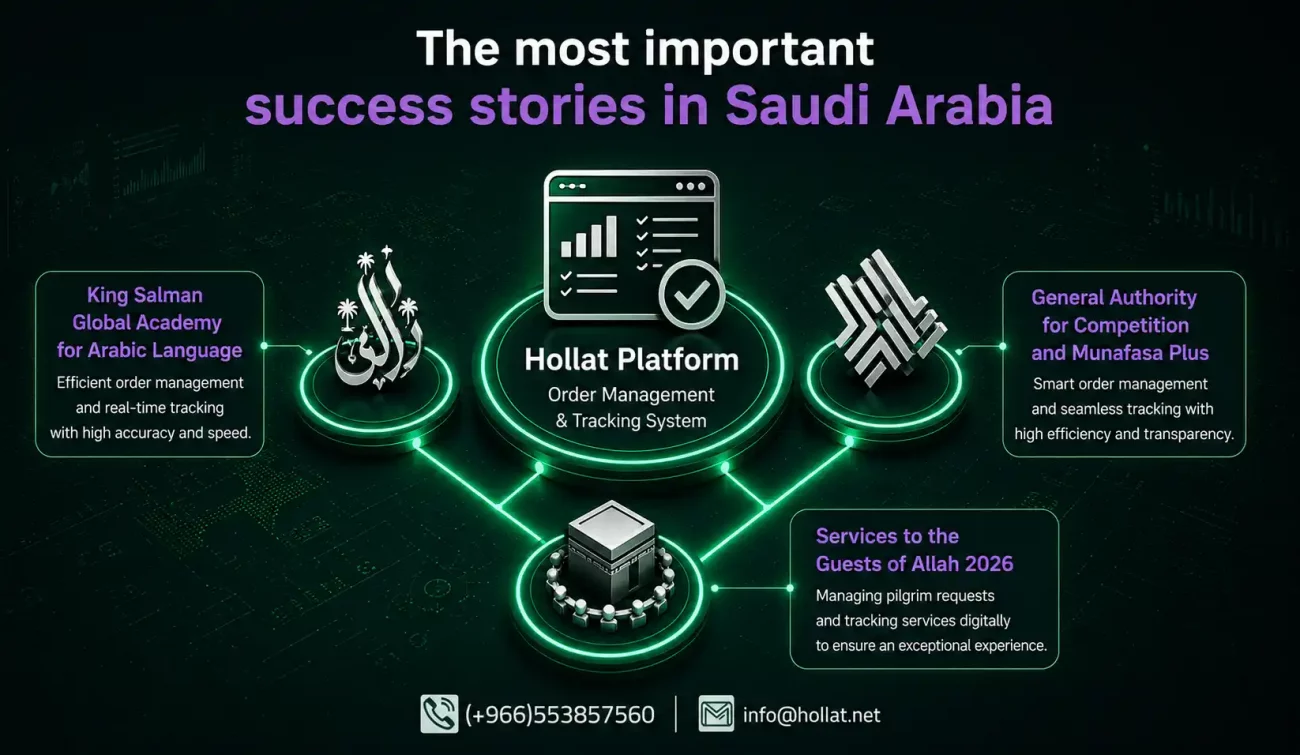
Hollat is able to assist organizations with digital transformation initiatives by supporting workflows, requests, services, customer interactions and business operations on a digital platform.
Its projects highlighted provide examples of how technology can be used in various institutional contexts in Saudi Arabia.
King Salman Global Academy for Arabic Language
The King Salman Global Academy for Arabic Language is one of its examples of institutional digital transformation, Hollat notes.
Structured digital workflows can be useful for organizations with several administrative processes and departments to keep requests, approvals, communication and service activities organized.
Having an integrated digital workflow can help institutions gain better operational visibility and coordination.
General Authority for Competition and Munafasa Plus
Hollat also mentions Munafasa Plus in regard to the General Authority for Competition.
Digital platforms can facilitate service requests and interactions, and offer a structured workflow for carrying out activities. This can help to make things more transparent, trackable, and communicated with their beneficiaries.
These examples illustrate the potential of digital transformation for government to go beyond digitization and enhance the end-to-end service experience.
Services to the Guests of Allah 2026
Hollat has also highlighted digital services supporting the Guests of Allah in 2026.
Services connected with pilgrims and visitors can involve significant volumes of requests and interactions, particularly during periods of high demand. Digital platforms can help organizations coordinate service requests, route cases, monitor progress, and provide operational visibility to relevant teams.
This type of implementation shows how digital technologies can support complex public-facing services where speed, coordination, and scalability are essential.
How Hollat Enables Digital Transformation Excellence?
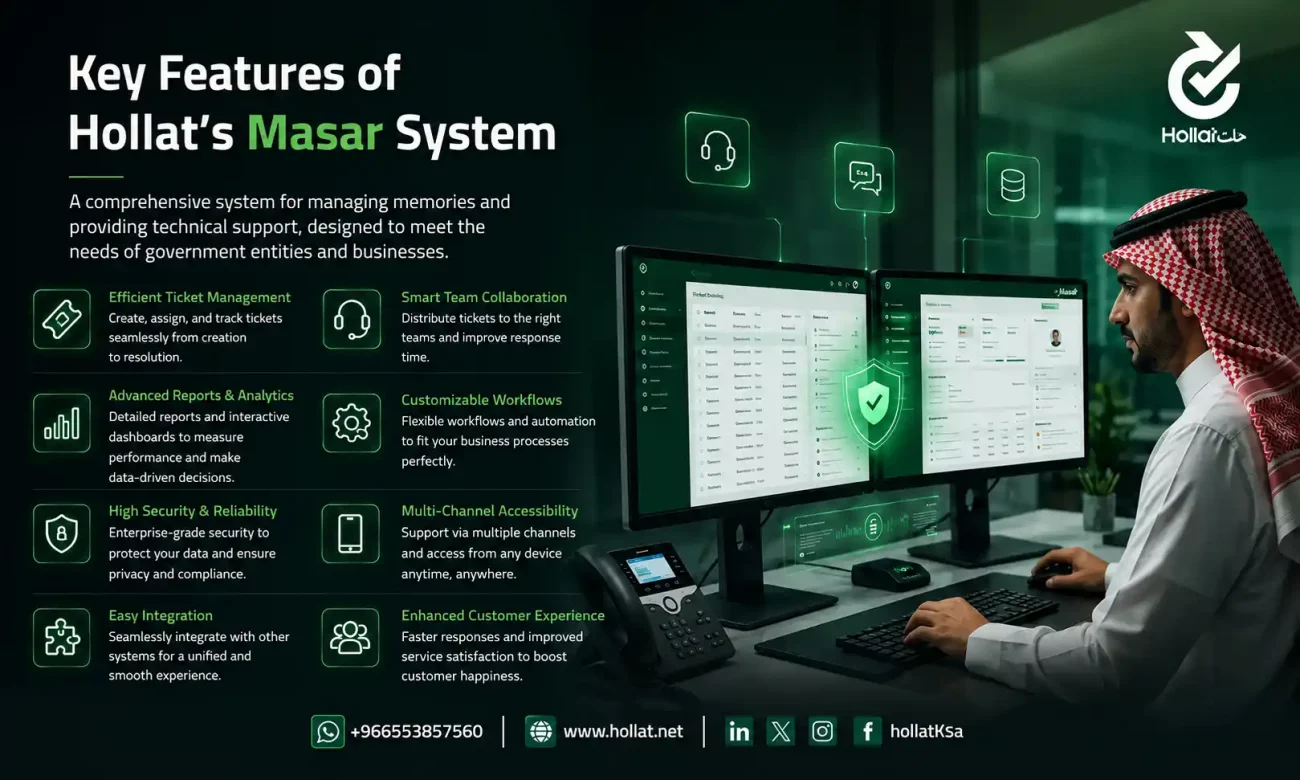
Hollat provides a unified digital platform designed to help organizations improve service management, workflow automation, customer interactions, and operational visibility.
An effective transformation platform should connect technology with actual business processes. Hollat supports this through capabilities such as configurable workflows, request management, task automation, SLA monitoring, reporting, analytics, integrations, and multi-channel interactions.
For example, a customer or employee request can enter through an available digital channel and then be automatically categorized, assigned, prioritized, and monitored. Managers can track the request throughout its lifecycle and analyze performance data through centralized reporting.
This approach can also support Government Help Desk operations by providing structured request management and service tracking. Instead of relying on email or disconnected communication channels, help desk teams can manage requests through defined workflows and monitor service performance.
Hollat can also contribute to government automation by helping public-sector organizations automate repetitive tasks and establish standardized digital processes.
The key advantage of this approach is that transformation becomes connected to measurable operational outcomes. Organizations can identify inefficient processes, redesign them, automate appropriate activities, and use performance data to continue improving.
For Saudi institutions, this can support broader modernization objectives while creating digital experiences that are more accessible, transparent, and efficient.
Contact Hollat
Ready to accelerate your digital transformation? Contact Hollat today to discover tailored digital solutions that improve workflows, automate operations, and support sustainable organizational growth.
FAQs
What are the 7 pillars of digital transformation?
The commonly discussed pillars include strategy, customer experience, people and culture, processes, technology, data and analytics, and innovation. Organizations may define these pillars differently depending on their industry and transformation framework, but successful transformation generally requires alignment between technology, people, processes, and business objectives.
What is the best example of digital transformation?
A strong example is replacing a fragmented manual service process with an integrated digital platform that allows users to submit requests online, automatically routes them to the appropriate teams, manages approvals, tracks SLAs, and provides real-time reporting. This transforms the complete process rather than simply digitizing one step.
How long does digital transformation take?
There is no universal timeline. A focused workflow or service transformation can take weeks or months, while organization-wide transformation may take several years. The timeline depends on organizational size, process complexity, technology requirements, integrations, data readiness, employee adoption, and the scope of the transformation.
What are the four types of digital transformation?
Four commonly identified types are business process transformation, business model transformation, domain transformation, and organizational or cultural transformation. Organizations may use different classifications, but the underlying concept is that transformation can affect processes, services, business models, and the organization itself.