

Workflow Tracking to Optimize Business Processes

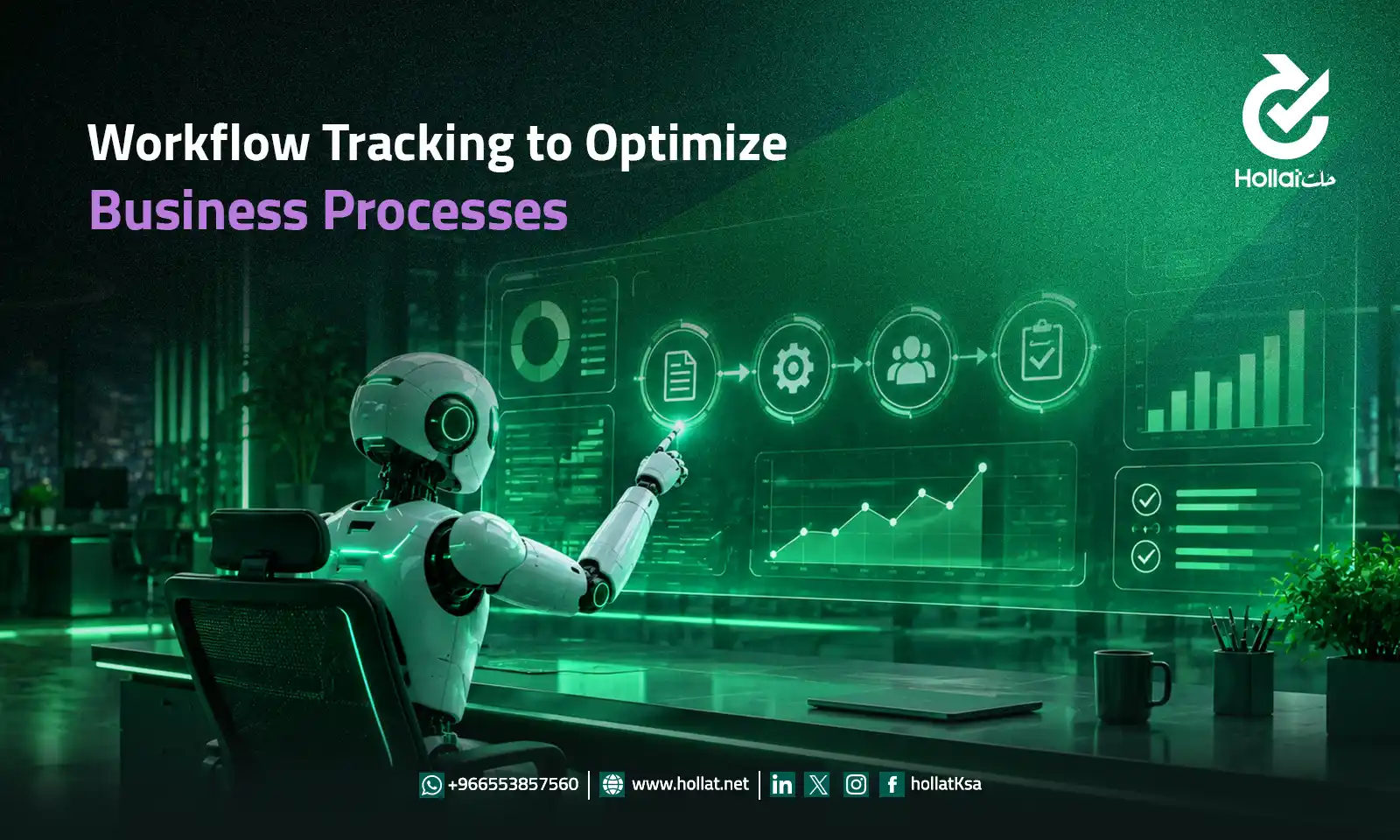
Each time of delay or mis-handoff for an approval or each time a request sits stagnant in the system is a time that an organization cannot recover. With workflow tracking, government agencies and businesses can see the status of each workflow process in real time, preventing bottlenecks from becoming citizen complaints or deadlines missed. This guide explains the meaning of workflow tracking, how AI has transformed it and how Hollat has implemented it in several key Saudi organizations.
What Is Workflow Tracking and Why Does It Matter for Business Process Optimization?
Workflow tracking involves real-time, end-to-end visibility and insight into all workflow steps, who is responsible, and how long they take. Rather than the processes going back and forth in email, a spreadsheet, and on the phone, a tracking system records each action with a time stamp.
This visibility is the base for optimizing business processes. A lack of visibility of a problem will prevent you from solving it. Workflow tracking transforms those invisible delays, such as a request that has languished for three days without getting signed off, or a form that has been stuck in the wrong department, into data that can be tracked and used to make decisions.
How AI Elevates Workflow Tracking Beyond Manual Monitoring
Manual monitoring requires someone to keep in mind to monitor status or follow a status update. By using AI-driven workflow monitoring, you can eliminate that reliance and keep a close eye on all processes, taking action before any problems are identified by a human eye.
- Predictive delay detection: AI systems detect that a step is likely to miss its deadline not after it has missed but because it showed a pattern of late delivery in the past.
- Escalation: When a task has been left without action, it automatically escalates to a supervisor.
- Recurring delays at the same stage or department are automatically identified and highlighted in the form of a pattern-based bottleneck analysis, which drives process redesign.
- Natural-language status queries: Staff don’t have to sift through a dashboard to find out where a request is.
This transforms workflow tracking from a log to an active Operational visibility software, which actively helps guard service quality.
Key Features of an Effective Workflow Tracking System
Efficient workflow tracking software for government and enterprise should feature:
- Customized workflows: The approval chain and routing rules are set up to fit your organization’s structure and not a template.
- Real-time dashboards: live status of all open processes, viewed by role.
- Full History and Timestamps for compliance and accountability: Audit trails.
- Architecture that integrates with existing SaaS applications to ERP, CRM, and the existing helpdesk ticketing system software in place.
- Automated notifications: notifications that are sent when a task is assigned, postponed, or completed.
- Approval workflow management: rules that can be applied to ten requests or ten thousand.
| Feature | Business Benefit |
| Customized workflows | Matches internal approval processes without changing existing operations |
| Real-time dashboards | Gives managers instant visibility into task progress and bottlenecks |
| Full history and timestamps | Improves compliance, accountability, and audit readiness |
| SaaS and enterprise integrations | Connects workflows with ERP, CRM, and helpdesk systems for seamless operations |
| Automated notifications | Keeps employees informed and reduces delays caused by missed updates |
| Approval workflow management | Scales efficiently from small teams to high-volume government and enterprise processes |
Business Process Optimization Through Workflow Tracking
When workflow saas tracking is embraced company-wide, the benefits are evident, such as measurable improvements in operations:
- Accelerated approvals and shorter cycles: delays are identified and resolved before they get to the front of the line.
- Less hand-off between teams: the automated routing eliminates the possibility of the request getting passed to the wrong person.
- More effective resource allocation, according to workload data: managers will see which teams are overburdened and move the resources accordingly.
- Better service quality and stakeholder satisfaction: citizens and internal teams receive quicker, more predictable responses.
Hollat’s Workflow Tracking Success Across Saudi Institutions

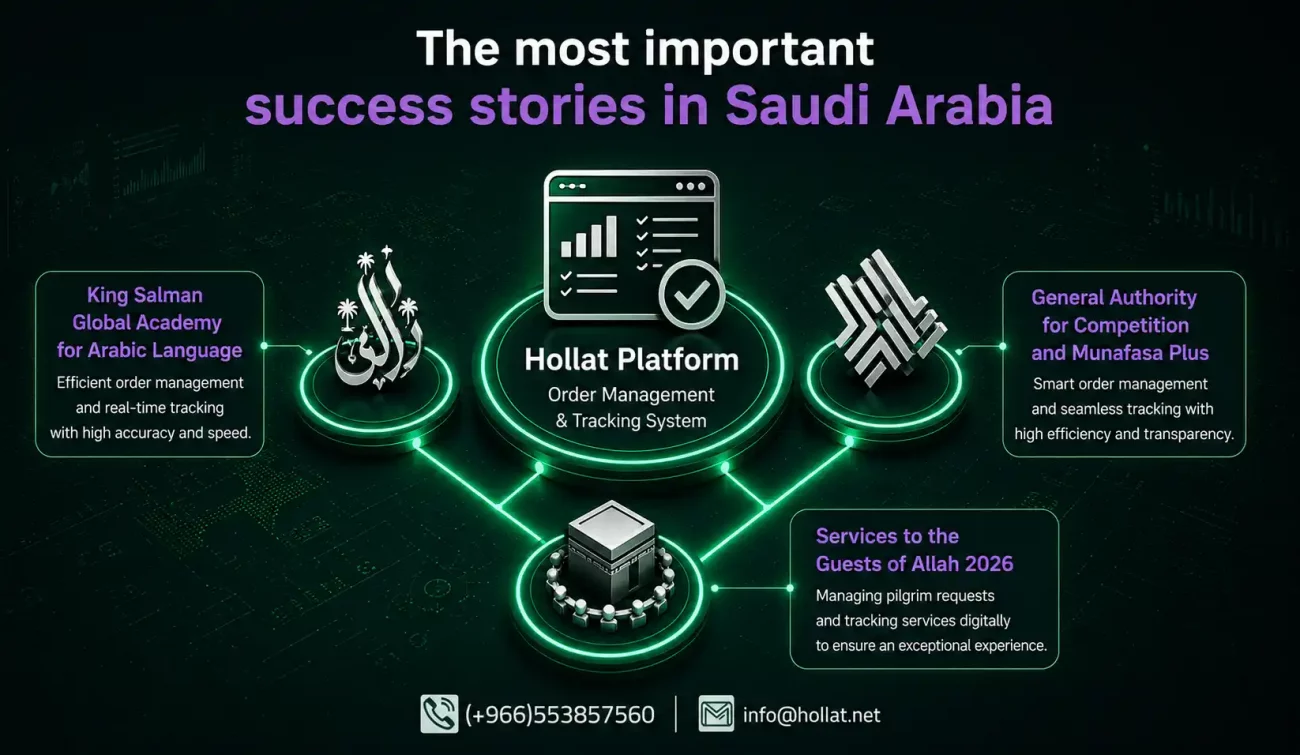
Hollat has rolled out its workflow tracking solution in various government and enterprise organizations in Saudi Arabia, each of which has varying workflow needs.
King Salman Global Academy for Arabic Language
The Academy has implemented a system using Hollat’s to monitor academic and administrative approval processes departmentally, as opposed to an ad hoc email chain.
General Authority for Competition and Munafasa Plus
Workflow tracking for an authority regulating competition and public tendering bodies, is critical and enables transparent approvals chains and auditable compliance.
Services to the Guests of Allah 2026
Hollat’s workflow tracking system is optimized for tracking every request, from logistics to guest services, visible and moving even during peak service periods of the year.
Hollat AI-Powered Workflow Tracking for Government
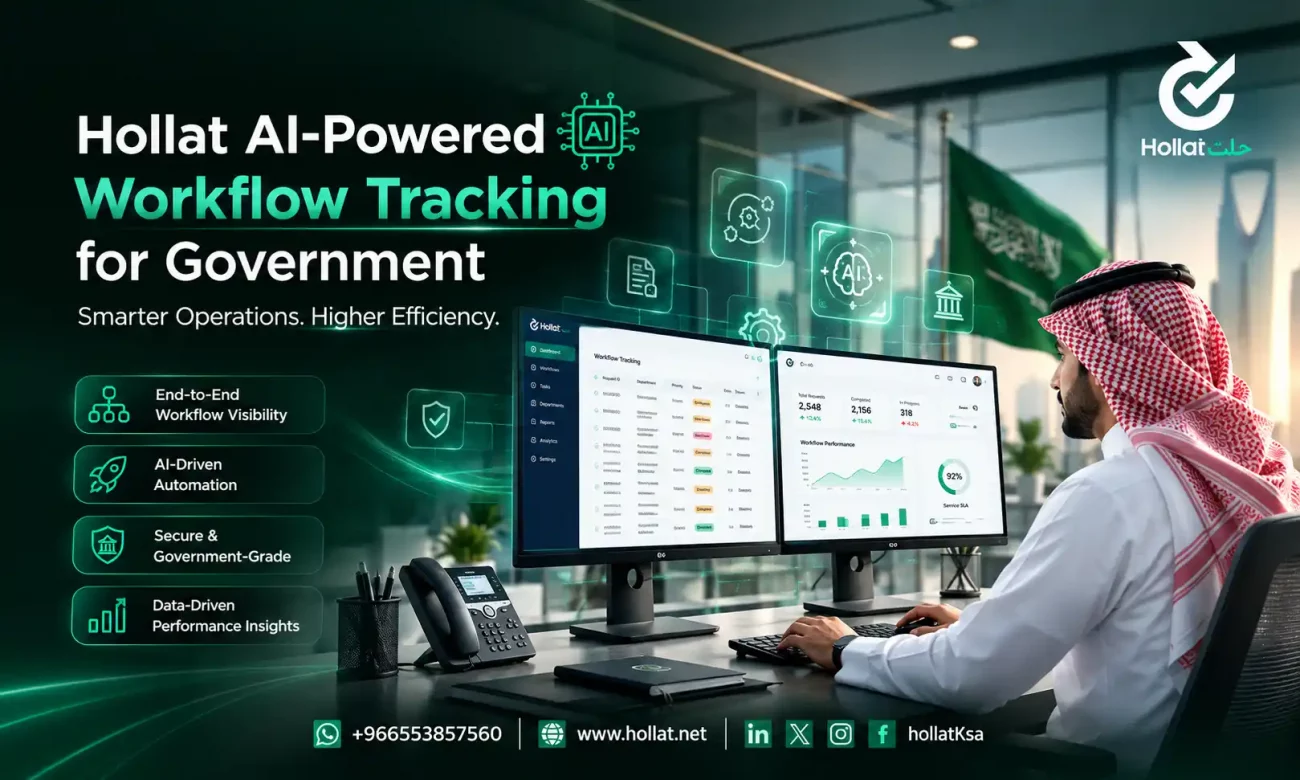
Hollat is built with business process automation, ITSM implementation experience, and native Arabic design expertise, all in one workflow tracking platform that is perfectly suited for government and enterprise use. The Hollat platform can be integrated with a stand-alone tracker or a CRM with workflow automation capabilities; it can fit into whatever organizations already have in place without rendering a rebuild.
Ready to Gain Full Visibility Into Your Organization’s Processes?
When teams are still managing their workflows by email, it’s time for a workflow tracking system designed to do just that. See how AI-powered visibility can be used throughout your organization’s workflows by reaching out to Hollat today.
Frequently Asked Questions
What’s the difference between workflow tracking and workflow automation?
Workflow tracking monitors and reports on the status of a process as it moves through its steps. Workflow automation goes further by executing those steps such as routing, approvals, or notifications without manual action. Most modern platforms combine both.
Can a workflow tracking system integrate with existing ERP or government platforms?
Yes. A well-built workflow tracking system connects with ERP systems, CRM platforms, and government infrastructure already in use, so teams aren’t managing processes in a disconnected tool.
What is a workflow tracker?
A workflow tracker is a tool or platform that records and displays the real-time status of a business process, showing who owns each step, how long it has taken, and where it currently stands.
What is an example of a workflow tool?
Examples include approval-routing platforms for internal requests, ticket-based systems for IT and citizen services, and project-tracking boards used to monitor multi-step processes across departments.
How to track own workflow?
An individual can track their own workflow by using a system that logs task status, deadlines, and handoffs automatically, rather than relying on memory or manual notes giving a clear view of what’s pending and what’s complete at any moment.