


Customer Management System with Workflow Automation

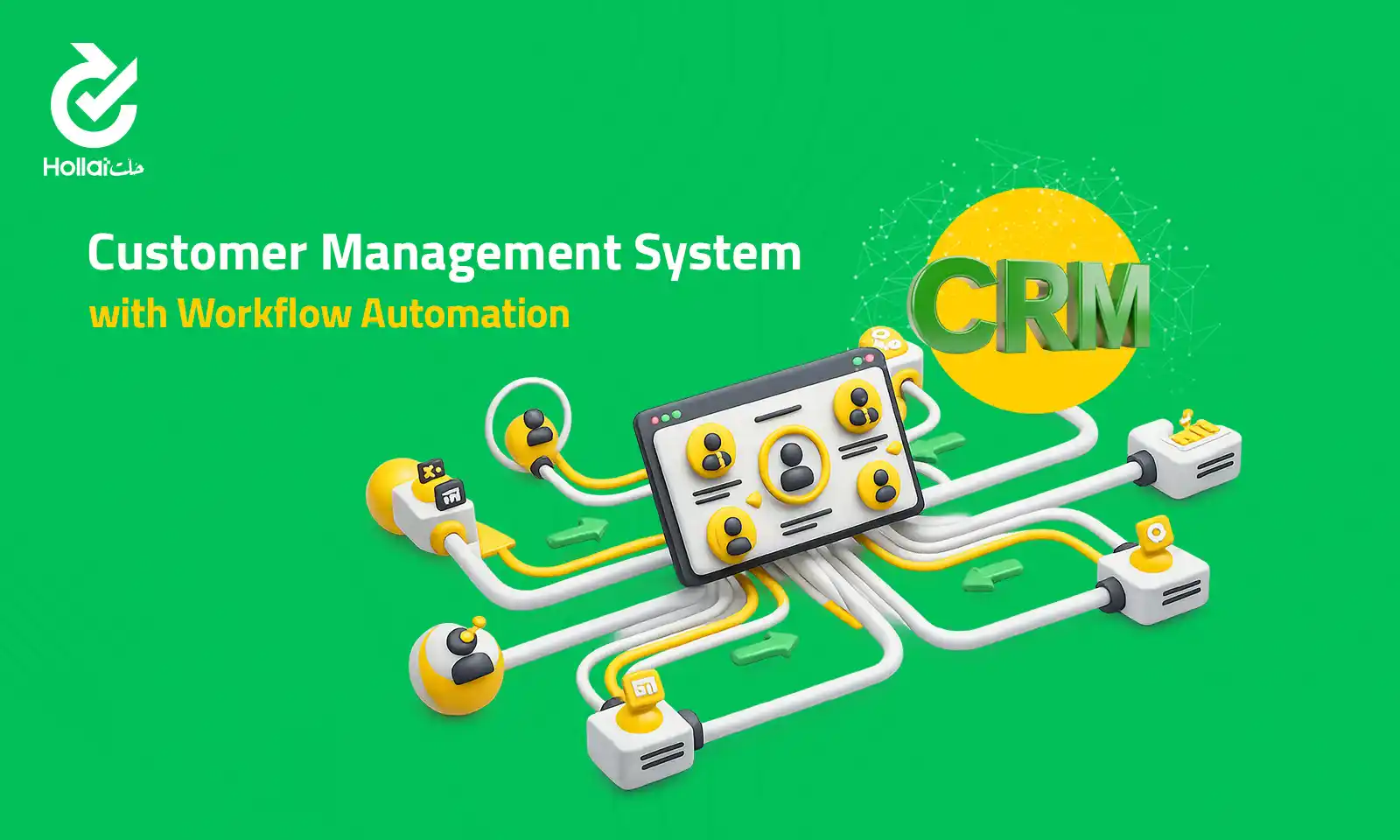
A customer management system has become an essential technology for businesses seeking to build stronger customer relationships, streamline internal processes, and drive sustainable growth. Organizations in highly competitive markets have to deal with large amounts of customer data, interaction, and service requests in the most efficient way possible. The absence of organized systems results in the loss of valuable information in isolated departments that have poor communication and opportunities are lost.
What Is a Customer Management System?
A customer management system is a software platform designed to organize, track, and manage customer information and interactions. It usually consists of contact management, communication tracking, assignment of tasks, reports, and analytics features.
Unlike traditional spreadsheets or disconnected tools, a centralized customer management system ensures that every team member has access to accurate and up-to-date customer data. With this integrated perspective, there is enhanced decision-making, increased personalization, and greater coordination within departments.
Workflow Automation in Customer Management
Workflow automation enhances the power of a customer management system by eliminating manual steps in repetitive processes. Automated processes have the ability to allocate leads, send follow-up messages, update databases, escalate support tickets, and inform team members without the intervention of human operators.
An example is where a new customer request can be given, and the system automatically classifies the request and assigns it to the respective representative, and also has the ability of scheduling follow-up reminders. This minimises delays in responding and standardised service delivery.
Workflow automation enables organizations to cut administration costs and enhance a well-coordinated workflow.
Improving Customer Experience Through Automation
Experience to the customers is one of the primary differentiators of the modern business environment. A customer management system with workflow automation ensures that customers receive timely responses, personalized communication, and consistent service.
Automated processes help businesses to deliver the welcomes, follow-ups, service confirmations, and satisfaction surveys in the opportune moment. Live monitoring of customer activities is another insurance that no question is left unanswered.
Managing Customer Interactions Across Channels
A contemporary customer communicates with the business in various channels such as email, phone, chat, social media, and websites. A customer management system centralizes these interactions into a single interface, ensuring consistent communication.
Omnichannel management will enable the team to trace the dialogue in the channels and to follow the context in each communication. Routing the messages to the appropriate department and dispatching the messages with priority according to the urgency is ensured by the workflow automation.
This combined method improves teamwork and gives the customer a smooth experience across the touchpoints.
Data Security in Customer Management Systems
The data of customers is very sensitive and should not be exposed to any attacks and theft. A secure customer management system includes role-based access controls, encryption, activity logs, and compliance features.
Automation of the workflow is also effective in terms of security because standardization of the processes and minimization of the manual processing of the data are achieved. Automated approval and validation regulations will be used to make sure that only authorized individuals can access sensitive information.
Customer Management for Sales and Support Teams
Customer information is vital because it helps the sales and support departments make correct decisions. A customer management system provides real-time visibility into customer history, purchase records, support tickets, and communication logs.
In the case of sales teams, automation has the ability to rank leads, allocate prospects, and launch follow-up processes. In the case of support teams, automated issue forwarding and escalation guarantee quicker resolution of issues.
Customizable Workflows for Customer Operations
All businesses possess different operational demands. A flexible management system allows organizations to customize workflows according to their processes. Onboarding, renewals, complaints, and feedback collection can be configured to custom automation. This flexibility makes the system to be in line with the organizational objectives and industry requirements.
Customer Management System Powered by Hollat
Hollat delivers a comprehensive customer management system enhanced with intelligent workflow automation. The solution offered by Hollat is created to simplify the processes and enhance customer relations, and combines data management, automation tools, and advanced analytics on a single platform.
Knowing the operational environment of every client, the workflow of Hollat is tailored to optimize the sales processes, enhance the responsiveness of the provided services, and provide safe data processing. Scalable architecture and enterprise-level reliability enables organisations to revolutionize customer management processes in a sustainable way by using Hollat.
Contact us
Ready to transform your customer operations with a powerful customer management system and workflow automation? Contact Hollat today to explore tailored solutions that enhance efficiency, improve engagement, and drive business growth.
Tracking Customer Performance and Engagement
Continuous improvement is only possible by monitoring customer performance metrics. A management system provides dashboards that measure response times, customer satisfaction scores, engagement levels, and conversion rates.
The automation of workflow enables the time-scheduling of a follow-up based on behavior, purchase history, or inactivity. Such understandings are useful as they guide businesses to streamline strategies and boost long-term relationships.
Through data-driven analytics, organizations would be able to optimize campaigns, improve retention, and increase lifetime customer value.
Choosing the Right Customer Management System
Choosing the right customer management system requires a structured evaluation process to ensure long-term value and operational alignment. Below is a comparison table highlighting the most important evaluation criteria:
| Evaluation Criteria | Why It Matters | What to Look For |
| Scalability | Supports business growth without system replacement | Cloud architecture, flexible user expansion |
| Integration Capabilities | Prevents data silos and ensures seamless workflows | API support, ERP and third-party integrations |
| Security Features | Protects sensitive customer data | Encryption, role-based access, compliance certifications |
| Workflow Automation | Improves efficiency and reduces manual tasks | Custom automation rules and triggers |
| Analytics & Reporting | Enables data-driven decision making | Real-time dashboards and performance insights |
| Omnichannel Communication | Maintains consistent customer interactions | Unified email, chat, phone, and social tracking |
| Ease of Use & Vendor Support | Ensures fast adoption and continuous optimization | Intuitive interface and responsive technical support |
Implementation Challenges and Solutions
Implementing a customer management system requires careful planning, structured change management, and clear operational alignment. The advantages of automation and centralized customer data are quite high, but at the same time, the implementation process is usually characterized by technical and organizational challenges that organizations may face. The awareness of these risks at an early age can be used to guarantee better transition and improved long-term outcomes.
The following is a summary of some of the most common implementation issues and effective solutions in straightforward key points:
- Resistance to Change The workers can be unwilling to use new systems, and this can decrease the rate of use and slow down the work process.
- Data Migration Issues: Migration of data with legacy systems may lead to incomplete or erroneous records of customers.
- Solution: Data cleansing, validation and gradual migration to guarantee accuracy and continuity.
FAQs
What is a customer management system?
A customer management system is a software platform that helps businesses organize customer data, track interactions, and automate workflows to improve service and sales performance.
How does workflow automation improve customer management?
Workflow automation reduces manual tasks, accelerates responses, ensures consistent communication, and enhances operational efficiency.